Showing posts with label science communication. Show all posts

Saturday, October 26, 2024

Darwin's House Plants, Water Diviners, Geology Podcast

 A couple of good articles and a geology podcast.

1) “Spontaneous Revolutions” Darwin’s Diagrams of Plant Movement: Darwin's unbounded curiosity for nature led him down many unexpected research pathways. Towards the end of his long career, his restless mind noticed the growth patterns of his house plants. Determined to understand more about their motion and the stimuli, he spent hours tracking tendrils grow and came up with innovative ways to record their movements on paper. Natalie Lawrence has written a lovely essay on this lesser known chapter of Darwin's life and work. 

2) Trust, cost go greater depths to sustain unscientific water divining practice: Large swaths of Indian agriculture is desperately dependent on access to groundwater. Simrin Sirur explores the reliance on water diviners in south India. Diviners use sticks, coppers tongs, coconuts, magnetic compass, and chains with keys as their instruments for sensing groundwater. Despite all this unscientific baggage, many diviners are not all that ignorant. They have a knowledge of the local landscape and groundwater availability. Their prediction relies more on their past experience and a dollop of common sense. 

I must tell you about my experience with a diviner. My neighbor requested that I accompany her to a plot of land outside Pune. She had hired a diviner to help her locate groundwater. We picked him up en route. He was the late Pandit Bhimsen Joshi's son! On reaching my friend's property he got to work with copper tongs. After a few minutes of walking  up and down the site the copper tongs started shaking. He indicated the spot to drill and suggested going down to a depth of 150 feet. On the way back he cheerfully told us that he knew that the adjacent plot owner had struck water at 150 feet. Past experience and common sense go a long way! 

3) Geology Bites Podcast:  Conversations with Geologists: Oliver Strimpel has had quite an unusual career beginning with a doctoral degree in astrophysics. He later became the director of the Computer Museum in Boston and then a patent attorney. But geology beckoned him. He has worked alongside geology researchers trying to date rocks and unravel the timing of movement of the Karkoram fault in Ladakh. Geology Bites grew out of his passion for the subject. You will find a wide range of geology topics discussed on this site. 

I have so far listened to experts talk about radioactive waste disposal, continental crust composition, the inherent bias in the global sedimentary record, and on the evolution of minerals through geologic time. All have been excellent. The talks are about half hour, so they don't tax your patience too much. 

If you have free time coming up this Diwali, I recommend you dive into this collection of geology talks.

Monday, January 29, 2024

Is It A Lava Tube?

My latest field geology video is about a small cave in the basalt lava near my house in Pune city. The location is Hanuman tekdi, also known as Fergusson College Hill. The cave is along the slope right behind IMDR canteen. 

Is the cave a remnant of a lava tube, or has it formed by some other process? 

Sound on. Permanent Link - Fergusson College Hill Cave.


You can access this cave by walking along the path starting from the main gate of Gokhale Institute of Politics and Economics. Turn left as you approach the hill and after a few steps look up to the right. 

Visit quickly. As you can see from this photo, rubble from the construction works of water tanks at the top of the slope is slowly spreading and might cover up this cave. I hope not. 

More geology videos soon!

Tuesday, January 31, 2023

Readings: Gagging Indian Scientists, Human Evolution, Sand Mining

From the past couple of weeks:

1) Slow Subsidence of Scientific Institutions: As land movement and destruction of homes in Joshimath Uttarakhand became a prominent talking point, the Indian government reacted like it usually does when faced with an awkward situation concerning its own accountability. It imposed a gag order on its scientists, forbidding them from talking to the media until publication of a final report. Dinesh C. Sharma offers a thoughtful perspective on the corrosion of autonomy of India's scientific institutions and the damage this withholding of information does to open and informed debate. 

2) Teeth Reveal How Brains Developed In Utero: How fast did our ancestors brain grow before birth? When did patterns of brain growth become more human like? Teeth start developing very early in a fetus at about 20 weeks old and they fossilize well too. Researchers found a relationship between molar length and prenatal brain growth by studying teeth from skeletons of various primate species and comparing them with gestation length and mass at birth of each species. The final conclusion was that rates of pre natal brain development increased during hominid evolution and became more human like about one million years ago.  By anthropologist Tesla Monson.

3) Grains of Sand: Too Much and Never Enough. This is a topic of great concern in India too. Unregulated sand mining is stripping river valleys barren of sand, in turn changing river morphology and devastating habitats. Alka Tripathy-Lang writes about the global demand for sand and its impact on environment and livelihoods. What is the future for this resource? Will we learn to use it sustainably?  I'll also recommend this Planet Money podcast episode on Peak Sand featuring a stolen beach! - Episode 853: Peak Sand

Monday, April 25, 2022

Earth Day Geology Conversations

It is really heartening to see students take an initiative in outreach. The Science Paradox is one such science outreach effort.  Do take a moment to browse through their website and subscribe to their newsletter.  

For this Earth Day 2022, they invited me for a conversation about geology. The interview was conducted by Anaya Tiwari and Bhargavi Nerikar.  We talked about my decision to take up geology, the importance of geosciences, the role of outreach, books, and my parallel existence as a sports coach.

The conversation has been broken up into seven short videos. I am embedding the section on Geotourism below. 

The complete set of links to the interview are as posted.

1) What drove you towards pursuing geoscience?

2) Importance of geosciences.

3) How do you think geosciences can be incorporated in our education system?

4) What are  your thoughts on science outreach in reaching the masses and how effective that is?

5) Science outreach through geotourism.

6) Book recommendations for the field of geology.

7) What was the motivation to shift from academia to sports coaching?

 It was fun!

Monday, July 20, 2020

Infographic: Milestones In Climate Science

Prof. Katharine Hayhoe and Skeptical Science tweeted this infographic showcasing the history of climate science. There is a long article by John Mason on this topic on the Skeptical Science site.


Beautifully compiled by John Garrett. Especially telling is the close parallel between rising carbon dioxide levels and rising temperature (the blue and green lines), a fact that the fossil fuel industry has tried mightily to suppress. Don't get taken in by their subversion of this obvious connection.

Tuesday, September 24, 2019

Musings: Two Million Page Visits

Recently, someone who spends most of the day staring at excel spreadsheets told me that geology is a 'dry' subject.

Another typical reaction I get about geology is an inquiry as to why I choose this unusual or fringe field. That too mystifies me. How can a science that is so central to understanding how the earth works be 'fringe'?

Geological knowledge makes the world turn. But the search for metals, oil and coal is not its only utility. For the past 4.6 billion years, the earth has been in a state of constant churn, a dynamic driven by the transfer of chemicals and heat between its interior and the surface. Rocks, organisms, and air feed of each other in an intricate web of energy exchanges. As historians of the earth, we build narratives about this evolution by delving into the rocky archives of past oceans, terrains and climate. We try to understand the processes connecting these different realms on timescales both vast and fleeting.

These history lessons from the deep past give geologists a unique perspective on how the surface of the earth, our home, will change in the near and distant future, changes caused by the interaction of human activity and natural process. Geoscientists will have a critical role to play in solving the big challenges of resource management, environmental degradation and climate change.

Refreshingly, I saw a different attitude towards geology in younger minds. A few weeks back I was asked to judge a school earth sciences projects contest. The children had prepared some wonderful demonstrations of how geology and our daily lives intersect. They were curious about the subject and passionate about applying the science to better our future. This early immersion in earth sciences might just make them more responsible and better informed stewards of our planet.

That day gave me some hope for the coming decades.

I write to tell these richly rewarding stories about geology. Maybe I have succeeded somewhat in my endeavor.

I am forever seeking newer audiences for my writings. A request to you to pass on the link to my blog to your friends. You can also subscribe directly by email or follow me on Twitter.

As for my friend, I am happy to say that he responded well to a treatment of 'one week in the Himalaya', so much so that towards the end of the trip he asked for a geology book list.

Saturday, March 23, 2019

Two Short Talks - Deccan Basalts And Geology

My friend Milind Sathe has started an arts and science outreach initiative for children named Khula Aasmaan (Open Sky). He asked me if I could give two short talks, one on my career path and experiences in geology, and the other on Deccan Basalts.

We went to a nearby hill to shoot the videos. An abandoned quarry and the basalt rock made for a pretty and relevant backdrop to the video.

Here are the links. Email subscribers who can't see the embedded video can use the permanent link to go to the Khula Aasmaan web pages for access.

1) Link- Deccan Basalts: Eruptions, mass extinctions, western ghat escarpment, ground water properties.

One correction. I mention that India broke away from Africa about 100 million years ago. It was earlier, beginning about 160 million years ago.


2) Link- Geology: My career pathway and broad interests.


Hope you like them!

Thursday, December 13, 2018

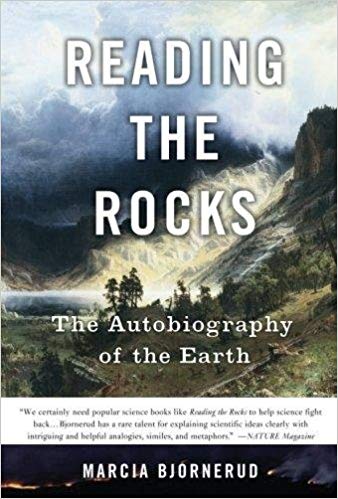
Books: Colliding Continents And Reading The Rocks

These two beauties came by mail!

Readers know that I have been traveling and writing about the Himalaya the past few years. I had gone to Delhi in 2010 to attend a wedding and casually asked my cousin whether he could recommend a trip to the Himalaya. After the wedding I ended up in Mukteshwar, Uttarakhand for a short stay. I was hooked and have been going regularly since. I realized that I knew almost nothing about Himalaya geology. My Masters course in Pune had barely touched the surface. There were no Himalaya geology experts among the faculty and that showed in the minimal attention it was given in the syllabus. After all these years,  I decided to use my trekking trips to observe the local geology and teach myself about the geological architecture of the Himalaya.  I have been reading from the research literature too. After 6 years of trekking, field observations and reading I can say that I do have a broad understanding of the lithology and structure of the Uttarakhand Himalaya. Mike Searle's book, based on his 30 years of field and lab work in the High Himalaya and Tibet, covering almost the entire mountain chain from the western extremity in Pakistan to Bhutan and the Indo-Myanmar ranges in the east, is going to add enormously to my understanding of the details of the geological processes in operation at the zone of collision between India and Asia and how they formed this enormous mountain belt.

Marcia Bjornerud's book comes highly recommended from my Twitter friends and colleagues. It tells the story of the earth by delving in to and elucidating the basic geological processes in operation on the surface and in the interior of the planet. I have been actively pursuing geology outreach for over a decade now, through my blog mainly, but more recently by taking people out in the field and conversing with them about the rocks we see around us and their place in the geologic history of the earth. I have been trying hard to improve my ability to explain basic concepts in an easy to understand language. I have a feeling this fine book will help me refine that skill.

I will be posting my thoughts and some excerpts from these two books from time to time.

Sunday, October 29, 2017

The Geology Of India In 220 Tweets

Ok, I am exaggerating.

Last week I hosted the @Geoscitweeps account and tweeted 8 stories about Indian geology. This is an earth sciences focused rotating twitter account curated by science writer Sandhya Ramesh (@sandygrains).  Geologists from all over the world have been volunteering to host the account for a week and tweet about their work. I volunteered for the week beginning October 16 and decided to broadcast some interesting stories about Indian geology.  I had written blog posts about some of the topics, but it still was a challenge to create an engaging  narrative using 20-30 tweets.

Here are the threads:

1) Does India have Cambrian age Burgess Shale type fossils?

2) The Tempo of Deccan Volcanic Eruptions

3) Deccan Lava Flows and Buddhist Caves and Rock Art

4) Piggy Back Basins and Seismic Risk of Himalaya Frontal Ranges

5) Exploring India's Fossil Sites and Paleogeography using the Paleobiology Navigator

6) Which of these Indian Island Chains is Geologically Older? Lakshadweep or Andamans?

7) Evolution of the Western Ghat Escarpment and Coastal Plain.

8) How To Discover Your Inner Geologist When You Go Trekking In The Himalaya

It was really gratifying to see the enthusiastic response by readers from all over the world... and particularly satisfying to see that a large number of Indians began following @Geoscitweeps as news spread that there was Indian geology on the menu.

More Indian geologists need to start writing and talking with the general public about their work. There is certainly an audience out there eager to hear from them. 

Monday, September 25, 2017

Evo Devo Musical Video

This is cool!

How do we develop from one cell to a complex multicellular creature? Tim Blais who runs A Capella Science has a musical video out explaining the genetic basis for this wondrous transformation. This is a field of study known as evolutionary developmental biology.


Book recommendation: Sean B. Carroll's Endless Forms Most Beautiful: The New Science of Evo Devo is a good introduction.

Saturday, July 30, 2016

New Ancestor Of Man And Other Rants About Media Reports

I am ashamed to admit this, but these days I just shrug away the various instances of poor science reporting I notice in the Indian media. But enough outrage has been building up over a couple of  particularly bad misrepresentations of scientific findings to prompt this rant.

 1) Indian Scientists Find New Ancestor Of Man

One shudders with embarrassment at this jingoistic hyperbole. The study is an international collaboration. Why the chest beating?

The article in Deccan Herald on July 26 by Kalyan Ray completely misrepresents the evolutionary story of Homo sapiens. Here are the sentences which go badly wrong -

"Andaman’s Jarawas and Onges are descendants of a completely new family of early men unknown to science so far"..

"The discovery has the potential to open up a new window in the history of human evolution by suggesting that Homo heidelbergensis—the first group of men who came out of Africa—had given rise to multiple lineages and not just the Neanderthal and the Denisovan—the two known branches from which all modern human beings have evolved".

The writer is suggesting the modern humans evolved entirely from Neanderthals and Denisovans outside Africa and that this new research is showing that the Andamanese are descendants of a yet third branch of humans based outside Africa.

This picture given by Kalyan Ray is false. Take a look at the hominin family tree presented in the research paper.


Source: Genomic analysis of Andamanese provides insights into ancient human migration into Asia and adaptation

It presents our current understanding of human evolution and migration and admixing events between different branches of hominins. Modern humans migrating out of Africa about 60 thousand years ago met and admixed with the Neanderthals and Denisovans who were branches of an earlier wave of human migration out of Africa. This earlier wave of migration may have taken place about half a million years ago. This admixture between archaic and modern humans resulted in all living non -Africans having  2%-4% Neanderthal ancestry with additional Denisovan ancestry more common in Melanesians.  Now, this study is proposing that another unknown extinct hominid, a possible third diverged population from those earlier migrations, contributed a small amount of ancestry to south Asians. The Andamanese may be taken as an approximate proxy of the original modern humans who entered the Indian subcontinent from Africa since after diverging from a common South Asian population they have admixed less with other modern humans.

Another quibble is the sentence "Hominids are ancestors of the great apes and humans". Well, hominids is a grouping that includes both extinct and living great apes and humans. So yes, some extinct hominid would have been our ancestor, but modern humans are hominids too. As an aside, to confuse matters further, Hominin are the group that includes the extinct and living members of only the human family, excluding the chimpanzee, gorilla and orang-utans.

2) Before The Pharoah: Fresh Evidence Should Make Us Question Earlier Views Of Indus Valley Civilization

This piece which appeared in the Times of India on June 6 is referring to a paper about the link between Holocene monsoon record and the evolution of Harappan civilization. The authors also suggest a revision of the chronology of the various Harappan cultural stages.  Here is their proposed chronology.This is based mainly on the chronology proposed earlier by G.L Possehl. The authors of this study augment  that with new dates from two samples.

"The successive cultural levels at Bhirrana, as deciphered from archeological artefacts along with these 14C ages, are Pre-Harappan Hakra phase (~9.5–8 ka BP), Early Harappan (~8–6.5 ka BP), Early mature Harappan (~6.5–5 ka BP) and mature Harappan (~5–2.8 ka BP)"

And here is the conventional chronology

"Conventionally the Harappan cultural levels have been classified into 1) an Early Ravi Phase (~5.7–4.8 ka BP), 2) Transitional Kot Diji phase (~4.8–4.6 ka BP), 3) Mature phase (~4.6–3.9 ka BP) and 4) Late declining (painted Grey Ware) phase (3.9–3.3 ka BP). This chronology is based on more than 100 14C dates from the site of Harappa and nearby localities".

Here is the chronology Mr. Mehta presents:


The first line in the introduction section of the research paper makes it clear that all dates are presented in BP (Before Present). Yet Nalin Mehta in his article bungles up and without applying the necessary correction presents the chronology as representing dates in BC. The difference is 2000 years! For example, 5000 BP is 3000 BC.

Another big error he makes is lumping all the Harappan cultural stages into one mature phase spanning 8000 -2000 BC ! This gives an erroneous view of the evolution of Harappan society. The mature phase represents urbanization. The earlier cultural stages were rural antecedents represented by farming and pastoral communities and even earlier human settlements in this area. By terming the entire time span of Harappan culture as belonging to the mature phase, Mr Mehta gives an impression that Harappan cities were as old as 8000 BC. This is certainly not the case. This new study revises the mature phase of the Harappan culture from the accepted ~2600 BC-2700 BC (4700 BP) to ~ 3000 BC (5000 BP). This proposed revision at one cultural site should not be taken to mean that dates for cities like Harappa, Mohenjodaro, Dholavira will suddenly be changed to 3000 BC. Their chronology needs to be ascertained independently. As of now, large number of C14 and thermoluminescence dates have secured the age of these cities to be around 2700 BC or so.

One has to be careful with terminology. Mr Mehta uses dates as old as 8000 BP (wrongly presenting them as 8000 BC) to imply that the Harappan civilization is older than the Paraoahs of Egypt. Such a comparison is meaningless. These earlier dates represent a rural society. No doubt there was population and cultural continuity of these earlier people with the later urban phase, but you can say the same thing about pre-urban Egyptian and Sumerian cultures evolving into a full fledged urban civilization. There was a long pre-urban phase from 5-6 millenium BC in Eygpt and Sumer (synchronous to the Indus region) with central political consolidation and urbanism by around 3100 BC in Egypt when the first dynastic kings known as the Pharaohs seized power. In Sumer, the transition from rural to urban took place even earlier with cities like Uruk gaining prominence well before 3500 BC.

The differently named cultural stages of the Indus valley carry a specific meaning  in terms of societal complexity and cultural changes. You can't just call everything mature Harappan and then claim that the finding requires some kind of a fundamental rethink of Harappan society. 

As it happens, the dates presented in the paper that Mehta is ga-ga about are not new. Archaeologists have been aware of the alternate chronology presented by G.L Possehl for about 15 years now! In that sense there is nothing revolutionary about the chronology presented in this paper.

..rant over.

Tuesday, September 8, 2015

Understanding Global Warming- Consensus Via Committees

This is an important summary by Spencer Weart, historian emeritus at the American Institute of Physics, Maryland, on the growth of our understand of the risks posed by global warming. He does not point to any particular scientist or specific scientific papers that provided "breakthroughs" in our understanding of climate change and global warming. Instead, he says that the real actors were various committees set up to collate the diverse research done on climate change and to come up with a consensus on the risks climate change poses to humans.

A closer look, if I had much more space, would certainly turn up plenty of individuals, along with lots of mistakes and controversies about details. Each new idea was first brought up by someone and then argued out at length. Our history of committees is like the swan that glides serenely on the surface while paddling furiously underneath. Still, I haven’t been telling a Whig history, reconstructing after the fact an understanding that never existed at the time. In this peculiar case a consensus was constructed by committees on the fly, a consensus that became increasingly detailed and certain decade by decade. The topic was so important that people recognized very early on that it could not be left to a few individuals making statements to the newspapers. Experts had to analyze the entirety of the peer-reviewed literature, even have elaborate computer studies done expressly for their use, and get together to hammer out conclusions that everyone could agree were scientifically sound. To be sure, in some areas they could only agree on the extent of their uncertainty, but that, too, was a genuine and important scientific conclusion.

and this on public perception ..

I submit that a major problem in communicating climate realities to the public is that the media, and everyone else addressing the public, feature individual scientists and their discoveries and disagreements. We have scarcely come to grips with committee consensus, a different kind of history of science. You will find no account digging into details of committee deliberations. I haven’t been able to do it here, and I am not sanguine about prospects for getting it done. In fact, the IPCC and the NAS and their members have been highly reluctant to make public any documents or recollections about just what goes on in the committee deliberations. Only recently, under pressure from critics, has the IPCC made its review process entirely transparent to the public. Be that as it may, I suggest historians and social scientists should give more attention to those committees. If we did, the public would have a better idea of how “science” comes to say what it does say about global warming —and a good many other issues.

Read the article here..

HT @aboutgeology 

Wednesday, February 18, 2015

Pangea: The Animated Life of Alfred Wegener

Another winner from Flora Lichtman and Sharon Shattuck. The duo are responsible for producing animated science documentaries. Their previous effort includes the beautiful The Animated Life of A.R Wallace.

This recent one is on another Alfred...Wegener.  He proposed in 1910 that continents drift. They must have once been together but then they broke apart and shifted positions through geological history. Wegener had spent time in the Arctic and in Greenland working as a meteorologist and the documentary proposes that his observations on the movements of icebergs and icefloes and the way broken pieces of ice could fit like a jigsaw puzzle primed his mind into similar thoughts about continents.

I'm really liking this series of documentaries on great science discoveries.

Do  watch this- Animated Life: Pangea

Monday, July 28, 2014

Some Interesting Podcast's I've Listened To Recently

I should be sharing this list more often-

1) On America's other migrant farm workers - Bees! Biologist Laurence Packer talks about the importance of bees in American agriculture. Incredible- millions of them are transported by trucks to aid in pollinating almonds and other fruit crops from one end of the U.S to the other!

2) Science Friday- Summer Book List 2014- What is not to like about a conversation that discusses a book like Proof- The Science of Booze!... and many more books featured in this talk.

3) Science Friday- Crafting Perfect Beer- more on the microbiology of beer and the burgeoning craft beer industry in the U.S.

4) Planet Money- The History of Light: Before there was the light bulb there was fat! Planet Money is one of my favorite podcast; it is economics explained with a light touch. This episode features how we got from candles made from cow fat and whale blubber to light at the flick of the switch and its economic implications in terms of the massive increase in human work productivity.

5) On Point Radio- The End of Night: A nostalgic look at what we have lost with our city life- the end of the night sky. Wonderful remembrances by callers too.

6) Fresh Air: To End All Wars: Its the 100th anniversary of the beginning of the Great War (World War I) and author Adam Hochschild discusses his book To End All Wars- you read this with a shudder- " I think the war remade the world for the worse in every conceivable way: It ignited the Russian Revolution, it laid the ground for Nazism and it made World War II almost certain. It's pretty hard to imagine the second world war without the first."

Tuesday, March 25, 2014

Neil deGrasse Tyson's Cosmos On Evolution

This past Sunday in India the second episode of Neil deGrasse Tyson's Cosmos was broadcast on National Geographic. The title was "What Molecules Can Do" and it was all about the evolution of life on earth. I quite enjoyed it. .. Just a couple of quibbles.

Dog evolution was showcased as an example of artificial selection which then Dr. Tyson used to argue for the efficacy of natural selection. It was depicted in cartoon form and the dog cartoons though showed quite a modern looking dog barking and scaring a wolf away from a campsite. This was meant to show the very early relationship  between dogs and humans. Early dogs wouldn't have looked as depicted in that frame. Its hard to point to modern dog breeds and find an analogue for the earliest dogs because they have changed so much and so late in their history. Still, a more smaller version of a wolf with a stubbier face would have been a best representative of early dogs, and not the hairier house pet looking one.

Later in the show Dr. Tyson wanting to emphasize that evolution is true says that the the "theory of evolution is a fact". That is a little confusing.  Evolution is a fact. Life has changed over the past 4 billion years and the theory of evolution is a theory that attempts to explain how it happened. There are many theories of evolution. Some like Lamarck's theory rely on organisms responding to environmental stimuli and the inheritance of acquired characters to explain change. Creationists in their garb of Intelligent Design have faith in an unknown intelligence guiding natural processes. Modern evolutionary theory that adds on to Darwin's and Wallace's insights is the most successful one.

Thursday, August 8, 2013

Science Writing In India - 2 Writing In Hindi

In the Special Focus section on Science writing in India in Current Science Sopan Joshi writes about the difficulties of writing about science in Hindi:

The world of science has developed a great bias towards English. The research comes from the English-speaking world,so the idiom is culturally English. The Hindi readership is not familiar with this idiom. For example, imagine the words required to explain plate tectonics in Hindi. For most scientific terms, there are translations in Hindi. But those translations mean nothing to the average reader. In fact, they mean very little to even the students of science. Because they are never used outside the classroom.

Each writer has to negotiate this problem on his terms, given his limitations. In my experience, using the metaphor of labour is useful. So, in a Hindi article on the world of computers, I have used the metaphor of carpentry to explain the nuance of a graphical user interface. To talk about the relationship between an operating system and computing software, I have found myself using the image of railway tracks and trains running on them. To talk about climate change and its impact on the monsoon, I have drawn from Hindu customs and mythology.

While this makes the material more accessible to a wider readership, it also dumbs down the narrative. One gets the feeling that there is no room for the beauty of complexity. Since there is very little written on science in the Hindi media, one also regrets the absence of a peer group. When you are  struggling with a choice of words, because you cannot think of words and phrases that can convey the meaning accurately and interestingly, you need peers to bounce off ideas, get feedback.


Since almost all post-high school science education in India is in English these problems do apply to other Indian languages as well.  Sopan Joshi should take heart that the Science Bloggers Association of India has put together a Hindi language science writing ecosystem which could provide him a sounding board for his ideas.

The world of science has recently developed a bias towards English, but don't forget there is a vast research literature in Russian, French, German, Chinese and Japanese, countries that unlike India have been using native languages for post high school science education.

Thursday, July 25, 2013

Science Writing In India And Some Thoughts On Punctuated Equilibrium

Kind of a hodge podge title but I didn't feel like writing two separate posts.

Current Science had a special focus a couple of weeks ago on science writing in India. Seema Singh has written quite well about her struggles to become a better science writer. She summarizes the state of science writing in India:

Science is just about reviving in India. People mention that the first time in three decades such a coordinated effort is being mounted to infuse funds and sparkle in Indian science. But there still are not too many stories that can be told with a single-sentence punch line. In which case, the art of chronicling the process becomes even more important. Now, whether the body of knowledge will help here, or the skill of storytelling, is left to my mind, to individual communicators, specialists or non-specialists. For me, personally, it is about homework and humility, intricate osmosis of critical inquiry and sensitivity, the spirit of curiosity, sense of wonder, and, of course, fact checking.

That's an important point about what and how science gets covered. Far too often, the media either exults in and tries to claim an Indian connection to a notable piece of research by an Indian scientist who left the country 20 years ago, or features scientists based in India only during satellite launches, nuclear power plant protests or major earthquakes. Science as an activity and scientists in their day to day working avatar are rarely featured.  A trigger to change this could come from within too. Few Indian scientists today are using social media platforms to initiate a conversation with the public. There has been a small increase in the number of Indian scientists who do blog with biologists and ecologists (1, 2) taking the lead, but my impression is that far too many write about everything else but their research.

Seema Singh also writes about her interesting encounter back in 2001 with evolutionary paleontologist Stephen Jay Gould who popularized the field of evolution like no other writer except perhaps Richard Dawkins. Gould along with Niles Eldredge proposed the controversial and widely misunderstood theory of punctuated equilibrium. Seema Singh describes it thus: ... which propounded that evolution takes place in rapid spurts of species differentiation, not in continuous transformations.

I wanted to expand on this.

Tuesday, April 16, 2013

Science Proceeds By Funerals

Above all, science is a human institution. And as a machine for thinking, it's greater and more powerful than any of its single participants. You said that science proceeds by tiny steps. It also proceeds by funerals.

University departments are just waiting for the professor to get out of the way so the younger guys can get in.


That was author Ian McEwan on a very listenable hour of Science Friday on the importance of science writing in science books as well as science in fiction. The other guests were cosmologists Brian Greene and Lawrence Krauss.

I thought Ian McEwan gave a really good account of why he includes science in his books:

FLATOW: Ian, why do you put science in your books? What - why do we have to know about quantum mechanics? Are you purposely doing that to teach us something or just to...

MCEWAN: No, absolutely not. No.

FLATOW: No.

MCEWAN: It just came along with the character. It's a reflection of my own pleasure in it, but it seems just a human enterprise. I mean, this is - I mean, the standard measure of how alive you are is the measure of your curiosity, and I think of science as organized curiosity.

We once relied on priests to tell us the shape and nature and purpose of the cosmos and life itself. It's been a long, slow story of that undoing. We now have a far more interesting story, and it's also penetrated our lives. I mean, there's climate change, and we all have these intricate, beautiful machines in our hands, and it's impacting on our decisions about bioethics and many other things.

So if we think of the novel as an investigation of the human condition, technology and science is now so woven into that condition. You cannot escape it. So it's inevitable, I think, that...


Download / Transcript


Thursday, January 17, 2013

Describing My Research Using Only 1000 Common Words

I have been tempted into this by a challenge issued to geoscientists  by Chris Rowan and Anne Jefferson at Highly Allochthonous. Can you use this new Text Editor and explain your research using the 1000 common word list of this editor. The editor gives you a warning if you use a word not in its list.

Here is my attempt to explain my research interests in carbonate sedimentology, the study of biogenic remains and their transformation into rock.

I study rocks made up of the hard remains of animals living in water a long time ago (10 hundred times 10 hundred years ago or more). That can tell us how deep or warm or cold the water was at the time the animals lived and also how warm or cold the air was at that time. Studying these remains from different times can tell us how things changed over a long time in the past and how things may change in the years ahead. Over many many years as the animals living in water die their hard remains turn into rock under ground. Different types of water moves through this rock leaving behind a sign and often making open spaces inside the rock. Sometimes in other near rocks soft remains change into thick matter which moves to fill these open spaces. All this happens deep under ground. It is important to know where, when and how this happened since we search for and need this matter to drive our cars and trains and to give us light and to make our lives easier in many ways.

Damn (in the list!).. that was harder than I thought .. but great fun! Here is the permalink to my short essay.

Try it out :)

Explanation of terms:

hard remains of animals - calcium carbonate skeletons of marine animals
10 hundred - thousand
hard remains turn into rock- lithification and diagenesis
open spaces - porosity
soft remains - soft tissue of marine creatures
thick matter- oil

Usually it is the technical terms that need explanation in everyday words. In this case its the other way around!

Tuesday, June 5, 2012

Request To Indiabioscience.org: More Science Please

Why don't Indian scientists working in India write about their research on open platforms? There are scientists who are blogging, but they write about campus life and the sociology of sciences and not about their research. And recently I came across a group blog Indiabioscience.org, which is a platform for biologists to:

The goal of IndianBioscience.org is for Indian biologists (junior and senior, working in India or abroad) to unite as a community- to find and exchange information, to make new contacts and find collaborators, to share perspectives, to attract a new generation of young people to scientific careers, and to welcome back talented Indians who previously might have established their careers abroad.

I went through the collection of posts from the contributors. Most of them are opinions of how to improve science education and the status of science in India, or on their personal experience of setting up research labs in India or negotiating the administrative maze, or advice to young postdocs and PhD candidates. 

All very useful.. but where is the Science? 

One of the stated goals of this initiative is " to attract a new generation of young people to scientific careers". I am not sure that young people will find it engaging to follow this blog and be inspired to take up a career in science if all the scientists on this forum come across as experts in university administration and pedagogy and have little to say about their research.

I find it boring to read post after post on "my views on improving Indian Universities / education / how to deal with various personal problems". 

Instead, why not tell us more about your own work?.. start a conversation with young aspiring students about your day in the lab and the nitty-gritty of science.