Showing posts with label fossils. Show all posts

Monday, December 15, 2025

Harappan Technology, Homo Floresiensis, Foraminifera

Some exciting readings for you- 

1)  Manufacture of synthetic stone in the Bronze Age Harappan Civilization.

Stone beads were important in Harappan culture and trade. They were made out of agate, an amorphous or cryptocrystalline form of silica. The Kutch region was the primary source of these agates. Stone and bead processing Harappan age workshops abound in this region. The tradition continues today. Some of the best ornamental agate is still being sourced from Kutch. The agates precipitate as secondary silica in cavities of the Deccan Basalts and associated silica rich lava.

To perforate these agates, the Harappans needed tools such as drill bits which were harder than the agate. For this, they manufactured a synthetic stone, now called Ernestite, by high temperature sintering of sand and laterite raw materials. Reaction temperature needed to fuse these materials into a cohesive rock would have reached 1100 deg C! Mesozoic sandstone, found all over Kutch, provided the sand, and the laterite came from iron rich weathered layers capping the Deccan Basalt.

A terrific study by M.K. Mahala and coworkers that details the provenance and fabrication of this interesting artificial stone has just been published in Nature Heritage Science. There is a lot of mineralogy and geochemistry described in the paper, but the conclusions are clearly laid out for all to understand.

2) Climate change and the decline of the Hobbit.

Why are small isolated populations of animals vulnerable to extinction?

Inbreeding, small geographic range, limited access to resources, reliance on one or few food sources, a chance catastrophic event, all may be factors making them susceptible to extirpation.

A case in point is the Hobbit or Homo floresiensis, the diminutive hominin discovered on Flores Island, Indonesia, in 2003. The archaeologic record shows it lived on the island for at least one million years. Homo floresiensis is thought to be a descendant from an early Homo species which dispersed from Africa 2 million years ago. The other famous inhabitant of the island that coexisted with the Hobbit and was its main food source is the dwarf elephant Stegodon.

A careful analysis by Michael Gagan and coworkers, published in Nature Communications Earth and Environment, using geochemistry of calcite from cave deposits show how climate change and decrease in water availability may have increased competition for resources and made life challenging for the inhabitants.

Summer rainfall began declining around 76,000 years ago with record low rainfall between 61,000 to 55,000 years ago. Both the Hobbit and Stegodon fossils become rarer during this interval and disappear by 50,000 years ago. Modern humans entered Flores Island around 46,000 years ago, and whether the Hobbit interacted with them on Flores Island is uncertain. 

3) The history of the ocean, as told by tiny beautiful fossils

The tiny fossils are planktonic foraminifera living suspended in the upper sunlit portion of the ocean. Their shells are made of calcium carbonate. They occur in huge numbers and have short lives. Their shells drop down and carpet the ocean floor, making them valuable archives for understanding evolution. Scientists make use of them for studying climate change too. Certain changes in the chemical composition of their shell are a function of water temperature. Tim Vernimmen has written a short piece on how foraminifera inform us about past environmental crisis and ocean conditions.

Tuesday, May 28, 2024

Evolution Through Punctuated Equilibrium: History Of An Idea

Palaeontologist Niles Eldredge explains how one of the most famous papers on paleontology and evolution came to be published: 

Steve was determined to be a part of Tom’s plan to do a GSA symposium and publish a book of essays on this new-fangled concept of “paleobiology.” Tom had a list of topics and was shopping around for speakers to be assigned to each one. When Steve saw the list, he told me that he had first wanted “morphology”—but that was already assigned to Dave Raup. So he opted instead for “phylogeny”—but that had been grabbed up by Mike Ghiselin. That left only “speciation,” the last of the evolutionarily imbued topics on Tom’s list, as yet unassigned. Steve called me up, explained the situation, and said he had settled for speciation—but could not think of anything much to say about it beyond the manuscript I had written and recently submitted to Evolution—there of course being no Paleobiology as yet. “The Allopatric Model and Phylogeny in Paleozoic Invertebrates”—a distinctly un-Gouldian, plodding, if accurate, title (Eldredge 1971). Without Ralph Gordon Johnson in the editorial chair of Evolution at that time, I doubt that that early paper would have been accepted. As it was, it was likely to have gone relatively unnoticed—had not Tom come along, Steve grabbing “Speciation”—and Steve asking if we could coauthor the paper along the basic lines of my first effort. He was stuck with “speciation,” and couldn’t think of anything much to say beyond what I had said in the Allopatric Model manuscript.

This passage is from an article by Niles Eldredge titled Reflections On Punctuated Equilibria, published in a recent issue of Paleobiology. The 1972 paper he refers to, coauthored with Stephen Jay Gould, was, Punctuated equilibria: an alternative to phyletic gradualism. It marked the beginnings of a long debate on how to interpret the patterns of morphological change observed in the fossil record. Do species remain in stasis, showing little morphological change through much of their existence as Eldredge and Gould argued? Do periods of rapid morphological change coincide with the origin of new species (speciation)? Supporters hailed it as a revolutionary work. Critics called it 'evolution by jerks', a jibe aimed not just at the patterns of change.

Dr. Eldredge provides a very insightful look at the history of this idea including some fascinating snippets on Darwin's thinking about divergence and species origins. For Darwin, change accumulates incrementally over long passages of time. Divergence via natural selection can give rise to descendant varieties even without geographic isolation of a population. Later thinking has given more importance to exogenous factors like climate change in causing habitat fragmentation and reproductive isolation. Populations gets geographically isolated first, and then diverge from the ancestral species either through natural selection or random genetic drift. Eldredge and Gould applied this idea to the fossil record and emphasized that the sudden appearance of new fossil species is a manifestation of long periods of stability interrupted by episodes of isolation and geologically rapid shifts in morphology (allopatric speciation).

There is a lot to take in and think about the long term patterns of change preserved in the fossil record. But it is enriching reading. The article is open access.

Friday, February 16, 2024

Patterns Of Angiosperms And Insect Evolution

Charles Darwin famously called it an 'ábominable mystery'. He was referring to the sudden appearance and diversification of flowering plants in the Cretaceous fossil record. He noticed that these early fossils resembled modern flowering plants. 'Primitive' or ancestral stages were missing. Today, biologists categorize these as crown and stem representatives of a group. 

The first fossil evidence of flowering plants is from 140-130 million year old sediments. These are early types of pollen grains with one aperture (uniaperturate). Triaperturate pollen is found in slightly younger 125 million year old rocks. Towards the end of the early Cretaceous, by around 100 million years ago, flowers, leaves, and other organs appear from several continents representing all the major groups of angiosperms.

The picture below is of an early Cretaceous (~100 million year old) flowering plant from the lotus family. The location is northeast Brazil. There is a remarkable preservation of the whole plant, with connected roots, rhizome, leaves, and aggregate fruit. 

Source: William Vieira Gobo et.al. Nature Scientific Reports 2023- A new remarkable Early Cretaceous nelumbonaceous fossil bridges the gap between herbaceous aquatic and woody protealeans.

Taking a long view of their evolutionary pattern, angiosperm diversification is structured in three phases. The first phase was a steady expansion through early to late Cretaceous. There was more rapid diversification in late Cretaceous by around 70 million years ago. Enumeration of floral species through the Cretaceous indicate that angiosperms made up about 5% of species in early Cretaceous, increasing to 80% by Maastrichtian times (late Cretaceous). Despite this increase in species numbers, in terms of biomass, angiosperms were still a small component of Cretaceous floras. Their domination of floral communities, including the origin of modern wet tropical forests, began in the Paleogene (65-24 million years ago) after the end Cretaceous mass extinction. Michael J. Benton, Peter Wilf, and Herve Sauquet have provided a good overview in New Phytologist of this pivotal phase of ecosystem change.

These evolutionary changes did not occur in isolation. Throughout the Cretaceous, significant changes were occurring to terrestrial ecosystems, with the origination of many plant and animal groups. This extended phase of ecosystem reorganization is known as the Cretaceous Terrestrial Revolution. Angiosperm diversification is thought to have played a key role in this transformation of land biodiversity, so much so, that the phase from about 100 million years to 50 million years ago is known as the Angiosperm Terrestrial Revolution.

The Cretaceous -Paleogene mass extinction hit angiosperms hard, as well as altering the trajectory of their evolution. For example, there was a 40% loss of diversity of flowering plants in Colombia following the mass extinction. But certain attributes of angiosperms, such as their partnerships with other organisms, their ability to efficiently capture energy and enhance photosynthetic rates, and an underlying genetic propensity to speciate, resulted in them expanding rapidly in the post extinction landscape. Angiosperm evolution opened up opportunities for a variety of land creatures including insects, spiders, lizards, birds, and mammals,  eventually driving up terrestrial biodiversity to 10 times more as marine biodiversity.

Paleobiologists are interested in understanding the interaction and impact angiosperm diversification could have had on other groups of plants and animals. Of particular interest is the diversification of insects in the Cretaceous and Paleogene.

Modern insect lineages began diversifying by 245 million years ago, long before angiosperms evolved. Gymnosperm and insect communities preserved in amber and sediments show that insects had an intricate relationship with host gymnosperms like cycads, conifers and ginkgoaleans.  Insect pollination of gymnosperms predated the origin of angiosperms by at least 100 million years and their fossil record show phases of diversification even when angiosperms were rare. 

Did angiosperm evolution also drive a rise in insect diversity? Pollinator insects particularly would seem to benefit from an abundance in flowering plants, and if so, what co-evolutionary patterns are apparent from the fossil record?

David Perise and Fabien Condamine have tackled this question in a new study in Nature Communications. I will share this beautifully compiled infographic from the paper that conveys so clearly the patterns of angiosperm and insect diversification through the Cretaceous and Cenozoic.

Digging into published databases, the researchers compiled data on the origination and extinction times of angiosperm and insect families. They then statistically analyzed whether angiosperm and insect origination and extinction times, and pulses of their diversification coincide. Their analysis showed that angiosperms seemed to have played a dual role in insect evolution. They mitigated insect extinction through the Cretaceous and spurred on the origination of new insect groups in the Cenozoic. Besides a broad analysis of insects, they also found that pollinator insects like bees and long proboscid butterflies show a pronounced diversification alongside angiosperm lineages. 

The success of angiosperms in the late Cretaceous and Cenozoic coincided with the decline in gymnosperms. Intrinsic mechanisms of genomic rearrangements in angiosperms resulted in repeated evolution of novel traits and specializations. They competitively displaced gymnosperms. The impact on gymnosperm dependent insects was variable. Generalist insect pollinators such as several beetle lineages transitioned to angiosperms. Much of the co-diversification of angiosperm and insects can be explained by this shift of gymnosperm pollinators to angiosperm hosts.  Gymnosperm specialized insect groups did not fare that well. For example, gymnosperms like Cheirolepidiaceae and Bennettitales went extinct by the latest Cretaceous. This was followed by the extinction of insect groups that were dependent on these plants such as some specialized long-proboscid flies, scorpionflies and lacewings.

Insect diversification did not depend only on angiosperms. Analysis also shows that warmer climate phases negatively impacted insect diversity and coincided with higher insect extinction rates. There seems also to be a relationship with other plant types. Spore plant and gymnosperm diversity had a positive impact on origination rates of insects. Ecosystem relationships and dependencies are multifarious and complex as this analysis between angiosperm and insect co-evolution shows.

Darwin's anxiety over flowering plants reflected his insistence that evolution is gradual. Nature does not make leaps, he stressed. He explained abruptness in the fossil record by invoking missing strata due to non deposition and erosion. Regarding flowering plants, he suggested that fossils were perhaps preceded by a period of cryptic evolution of that lineage that took place in a remote area or a lost continent, although he conceded that this was a poor explanation. However, this latter view, that a substantial lag time or a long fuse precedes the bang, continues to resonate among many biologists. Molecular methods that compares accumulated genetic difference to calculate the time of divergence of groups indicate a fairly long gap between the genetic branching of lineages and their first fossil appearance. 

Most familiar is the example of the origin of animals. Molecular data indicate that animals originated by 750 million years ago, yet unequivocal animal fossils appear by 570 million years ago, close to 200 million years later. Similarly, some molecular estimates put angiosperm origins to pre-Cretaceous times, stretching back 240-200 million years ago to Triassic-Jurassic, a good 100 million to 60 million years before first appearance of fossils.

This idea of a phylogenetic fuse has been recently criticized. Published in Systematic Biology, Graham E. Budd and Richard P. Mann have undertaken a critical examination of molecular clock methods. Their analysis indicate that popular methods used to assign probabilities to maximum age of lineages are biased against rapid lineage radiations being true evolutionary events. In their view, the mismatch between molecular dates of lineage origin and the timing of the first appearance of their fossils is an artifact. They point out that the coincident appearance of fossils from widespread localities in a particular sequence and across different modes of preservation faithfully records evolution. The time gap between the origin and later diversification of lineages is not that deep.

The 'abominable mystery' of the sudden appearance of fossil groups may in fact be a real biological motif in earth history, signalling the rapid radiation of lineages filling ecologic spaces following an environmental crises and evolutionary innovation.

Thursday, October 19, 2023

Links: Volcanic Underworld, First Americans, Billion Year Old 3D Microfossils

Readings over the past few weeks.

1) Taking the First Steps Into a Newly Formed Volcanic Underworld: Maya Wei- Haas describes a fascinating landscape on the Canary Islands in the Atlantic Ocean. Volcanic eruptions and the transport of lava via underground tubes has formed a subterranean world of stacked lava tunnels and caves. Their mapping is ongoing and scientists hope to understand not just the details of volcanism and the hazards it poses, but also how life can colonize such nascent surfaces, powered by nutrients from minerals. As one of the scientists remarks- "lava tubes is a rare chance to watch an evolving ecosystem from time zero".

2) It looks like the 23ky old human footprints at White Sands are solid: What is the earliest securely dated evidence of people in the America's? In 2021, there was a report of human footprints from an ancient lake in New Mexico. Since the footprints themselves could not be dated, seeds of an aquatic plant that were found in the same layer were carbon dated to about 23 thousand  years ago. That result was greeted with caution. The main concern was that the seeds may have taken up much older lake water containing less of the radioactive isotope C14. This may have made the dated material look older than it actually was. 

Now, there has been more work on the geochronology of the site using two more independent lines of dating. The results agree with the previously estimated date of 23 thousand  years. ArcheoThoughts summarizes the dating methodologies. 

3) Discovery of oldest 3D-preserved microorganisms: Before organisms evolved the ability to build hard skeletons, their remains have been preserved as impressions on soft sediment or as chemical degradation products recognizable by a light carbon isotope signal. Stefanie Terp reports on a discovery of 3D preservation of microorganisms from a mine in Ukraine. They are 1.5 billion years old! 

Scanning Electron Microscopy reveals the filamentous structure of these creatures. They are most likely a variety of fungi. Groundwater in the granite environment in which they lived was saturated with aluminum and silica. The microorganisms were covered and entombed in micrometer thin layers of aluminum silicate, perfectly preserving their delicate structure.

Tuesday, June 13, 2023

Links: Human Brain Evolution, Pyrometamorphism, Upper Atmosphere Cooling

I learned some new things from these articles over the past couple of weeks.

1) Endocranial Volumes and Human Evolution: Warning- this figure posted below is deceptive!

Although hominin brain volumes increase over a 7 million year history, patterns of growth in separate lineages show, both, stasis & episodic increase. In an excellent analysis, anthropologist Ian Tattersall shows that a trend towards large brain volume is expressed independently in three separate hominin lineages, raising important questions about the role of social interactions and environmental pressure that could lead to the evolution of larger brain size. And most intriguingly, brain volume size has decreased in the Homo sapiens lineage over the past few tens of thousands of years. What does it mean for the evolution of complex behavior and symbolism?

2) Scorched Minerals in Sedimentary Rocks: Petrologist Michael Anenburg reports a most unusual suite of minerals. They formed by pyrometamorphism, i.e., the transformation of sedimentary rocks by heat supplied by large fires. This process takes place at or very near the surface, likely driven by the ignition of oil bearing shales or coal seams. The rocks described here are from the Dead Sea area of Israel. Before metamorphism, they were a sequence of impure limestones and phosphorites. There is a memorable description of these combusted limestones in the paper; 

" Gross discovered that the Hatrurim Formation was fundamentally a natural Portland cement factory. Indeed, many of the synthetic compounds found in cement occur naturally in the Hatrurim Formation and were subsequently named after the local Hebrew or Arabic place names in which they were found, such as hatrurite, ye’elimite, and harmunite. Concrete is formed when Portland cement is mixed with water, and the pyrometamorphic minerals of the Hatrurim Formation have experienced a similar process. Hundreds of thousands to millions of years of exposure to rain and groundwater has led to the hydration and alteration of most of the high temperature minerals. The end result is essentially a naturally formed concrete". 

3) The Upper Atmosphere Is Cooling, Prompting New Climate Concerns: The earth's atmosphere is layered. While the lowermost  layer known as the troposphere is warming as we emit more and more carbon dioxide, satellite data shows that the two uppermost layers, the mesosphere and the thermosphere have cooled by 3.1 deg F between 2002 and 2019. Scientists worry about the impact of this cooling on weather patterns on earth. A succinct summary by Fred Pearce.


Author Contact: suvrat_k@yahoo.com

Wednesday, December 28, 2022

Holiday Readings: Ancient Amputations, First Americans, Fossil Molluscs

Wishing my readers a very Happy New Year! I hope these readings will be to your liking.

1) Can ancient amputations tell us about the care systems of our ancestors? Paleoanthropologist John Hawks surveys the fossil record of ancient humans for signs of severed limbs due to trauma or disease. He also presents cases of limb loss in other primates and offers a perspective on what all this can tell us about past social systems. 

"Both humans and nonhuman primates show us that survival and life after extreme injuries happen under varied circumstances. Bioarchaeologists tend to highlight severe injuries, which stand out from the more subtle patterns of osteological signs of disease that can be understood only across large samples of skeletons. But such individual stories rarely yield unambiguous interpretations".

2) Finding the First Americans. Anthropologist Jennifer Raff brings together often conflicting genetic and archaeological data on this ever vexing and complicated question of how the Americas were populated. 

3) Finding Molluscs. This podcast (with transcript) is part of an excellent continuing series of earth science and paleontology podcasts by Mongabay India. In this episode, host Sahana Ghosh talks with paleoecologist Devapriya Chattopadhyay on her research on fossil molluscs. Dr. Chattopadhyay uses these creatures to track ancient environmental conditions and ecology. She also speaks on the urgent need for India to create a national fossil repository and museum which will help preserve our deep history for future generations.

Wednesday, August 31, 2022

LInks: India Aquifers, Early Bipedalism, Mars Geology

 Here are some interesting articles I read recently.

1) Mapping India's Aquifers.  Indian agriculture depends heavily on groundwater. To understand and manage this resource we need a good idea of the nature and extent of aquifers. Subodh Yadav, Joint Secretary, Department of Water Resources, River Development and Ganga Rejuvenation, Ministry of Jal Shakti, has written an informative article on the National Aquifer Mapping Program. Detailed reports are available to the public through the Central Ground Water Board, Aquifer Information and Management System page. Mapping and report availability is still work in progress.

2) Is Sahelanthropus the earliest biped? A good article by Brian Handwerk on the many questions spawned from a recent analysis of a 7 million year old femur fossil. Fossil remains named Sahelanthropus tchadensis were found nearly 20 years ago in Chad, and various studies have come to conflicting conclusions on whether Sahelanthropus could walk on two legs. Bipedalism is considered to be one of the key traits distinguishing members of the human branch from other apes and so there is a vital interest in understand the timing and circumstances of its evolution. 

3) Ground Penetrating Radar images from Mars Perseverance Rover. The indefatigable Mars Rover loaded with geological instruments is currently exploring the edge of the Jezero Crater on Mars. Here, rivers emptied into a large lake depositing sediment and building a delta. The first radar images show inclined sedimentary layers which could be the classic sign of a delta architecture or something else, scientists suspect. Read on! By Holly Ober, University of California, Los Angeles.

Tuesday, February 22, 2022

Marking Vindhyan Time

About this time last year I wrote a piece for Nature India on the discovery of the fossil Dickinsonia from the uppermost Vindhyan strata exposed at Bhimbetka caves in Central India. Dickinsonia is considered to be an early animal that lived between 560 to 550 million years ago. This finding seems to confirm an Ediacaran age  (635-541 million years ago) for the youngest Vindhyan strata, termed formally as the Bhander Group. Earlier thinking was that these rocks are 1000 to 900 million years old! 

I have been thinking on and off about this discovery, not as much doubting it as trying to understand its implication from a different angle, that of the ways in which sediments accumulate in a basin and how the passage of time is recorded in sedimentary successions. 

The sedimentary rocks of the Vindhyan Basin have been subdivided by field geologists into four units based on characteristic sediment associations. From the oldest to the youngest, these are, the Semri Group, the Kaimur Group, the Rewa Group, and the Bhander Group.  Deposition of the Semri sediments began around 1700 million years ago and ended by 1600 million or so. Tectonic movements then uplifted, tilted, and eroded these rocks. Between 1200 million and 1100 million years ago the basin floor subsided and new sediment was deposited on the inclined layers of the Semri Group. There is thus a marked  'angular unconformity' between Semri and the overlying Kaimur strata, marking two distinct phases of basin history separated by 400 million years.

The age of Kaimur, Rewa and Bhander Groups, which are often referred to as the Upper Vindhyans, has been more difficult to pin down due to a lack of reliable radiogenic dating and age diagnostic biota. Despite this, a combination of magnetic properties, a few Uranium series dates from limestones, and the age ranges from zircon found in Bhander sandstones,  hinted that the youngest Vindhyan sediments are about 900 million years old.

The fossil Dickinsonia has upended this assumption and appears to have expanded the life of the Vindhyan Basin by a whopping 350-400 million years. This revision has been bolstered by two other age criteria. Microbial fossils typical of the Ediacaran Period have been reported from the Bhander. And secondly, in the year 2020, a detrital zircon dated to 548 million years ago was recovered from the Bhander. Zircons form in magmas or during high temperature metamorphic reactions. The mineral is then eroded away from these source rocks and deposited as a sedimentary particle in adjacent basins. The youngest zircon population in a sedimentary layer sets its maximum age,  since the strata cannot be older than the detritus it is made up of. It could be much younger than the contained zircon, but in this case a lack of Cambrian fossils has constrained the age of the Bhander to be older than 541 million years ago.

Let me now dive in to what has been pricking my geological curiosity. The Kaimur, Rewa and the Bhander are thought to be three distinct episodes of sedimentation. Stratigraphers may recognize them as 'depositional sequences' formed when accommodation space for sediment to accumulate is being created either by the basin floor sinking due to tectonic movements or due to eustatic (global) sea level changes. 

Such depositional sequences are building blocks of sedimentary successions in basins of all ages, each episode lasting at most few tens of million of years. V.S. Kale in a discussion note on Indian Purana basins points out that the physical characters of the sediments are not suggestive of slow sedimentation rates, and given their thickness, estimates that these sequences span 10-20 million years each. Even assigning the upper limit, Kaimur, Rewa and Bhander were deposited in about 60 million years or so. If Upper Vindhyan sedimentation began around 1200 -1100 million years ago and ended by 550-540 million years ago, that leaves about 550 million years of unrecorded elapsed time.

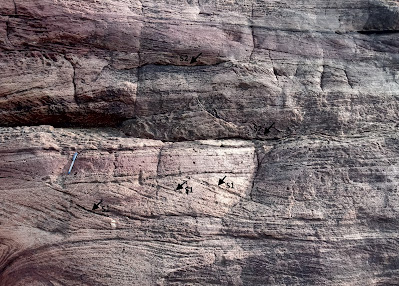
Sedimentation is an inherently episodic process with periods of non-deposition alternating with sediment accumulation. See this close up of an outcrop of a cross bedded sandstone from the Badami area in Karnataka.  


These sediments were deposited in a long lasting river system. Surfaces that result from non-deposition are marked as S1, S2.  In this hierarchical scheme, S1 spans perhaps a few minutes to a few hours and is a break in deposition on the lee side of  migrating ripples due to fluctuations in current energy. The S2 surface has developed over the channel sand body and spans months to years and represents seasonal fluctuations in currents or even a long drought which dries up the channel. 

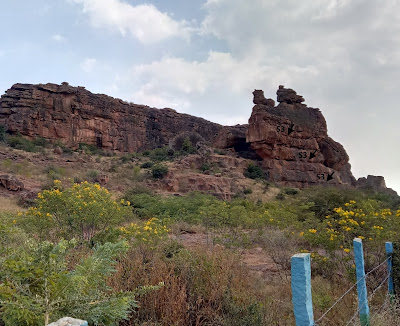
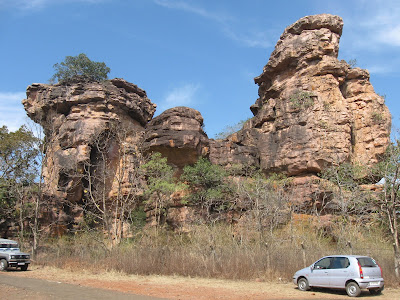
 Now, cast  your eye on this larger outcrop of the Badami sandstone. 

 
It has formed by the stacking of smaller sandstone units, each containing several surfaces of non deposition. The higher order surface S3 in this thicker pile marks a longer period of non-deposition and indicates a shift in course of the river channel. Hundreds, even thousands of years will pass, before the channel migrates back to its original location and deposition resumes at that locale.

Although I may be amiss in my specific interpretation of these surfaces of non-deposition, what I want to convey is that sediment deposition in all types of environments is interrupted by periods of non-deposition ranging from a few minutes, to thousands, even millions of years. The vast majority of elapsed time a sedimentary succession represents may be accounted for by periods of non-deposition and erosion. 

The Kaimur, Rewa and Bhander collectively account for a 60 million year time-span. If the revised age range for the Upper Vindhyans is correct then there were gaps of hundreds of millions of  years between the deposition of these Groups.

But these very long breaks invariably result due to tectonic uplift and cause pronounced erosion and chemical alteration of the exposed sedimentary surface. In outcrop it is recognizable as an undulating surface with the debris of weathering consolidated into hard soils, and in the formation of solution pits in limestone terrains. Such basin wide surfaces of marked erosion have not been found separating the Kaimur and the Rewa, and between the Rewa and the Bhander strata. 

Smaller breaks though do occur. Chandan Chakraborty in a study of sedimentary cycles of the Vindhyan Basin finds an angular discordance between the Kaimur and the Rewa, and the Rewa and the Bhander. However, this is restricted only to the south of the Vindhyan Basin. The discordance between the older and younger sequences dies out towards the north. This stratigraphic relationship  suggests that the tectonic movements were contemporaneous with sedimentation. The basin floor was tilted up on one side interrupting sedimentation and eroding the exposed strata there, while at the other end (north), subsidence and deposition continued. The periods of non-deposition and erosion between these sequences was a more localized event, lasting few millions of years at most. The kind of tectonic upheavals that may halt deposition for hundreds of millions of years across the entire basin are simply not attested to in the stratigraphic record of the Upper Vindhyans. 

It seems to me, and I say this mischievously, that the earlier estimate of 1000-900 million year age of the uppermost Bhander strata and for the end of Vindhyan sedimentation sounds quite reasonable! 

How secure is the finding of Dickinsonia and the assigned Ediacaran age of the Bhander Group? I am in no way trying to rebut this finding. The microbial fossil Arumberia found in the Bhander is considered by experts to be a reliable Late Ediacaran age indicator. However, the identification of Dickinsonia is based on a 3D digital reconstruction of photographs taken at the site of discovery. Due to the protected status of the Bhimbetka Caves, the scientists were unable to excavate the impression and subject it to a physical examination or a chemical test for organic residue. This is the only report of Dickinsonia from the entire Vindhyan Basin.

The young 548 million year date of the detrital zircon is based on one grain. The researchers are confident of their analysis and see no reason to reject this data point, though they admit that further corroboration of this date will be necessary given that previous studies did not report such young zircons from the Bhander strata. Curiously, no source terrain of this young zircon is identified in the paper.  

The news about Dickinsonia received wide coverage in India. That was expected given the long standing uncertainty of the age of the Vindhyans and the importance of the fossil for understanding early animal evolution and Ediacaran ecology and paleogeography.  But these new proposed timelines have thrown up a puzzle about rates of accumulation of sedimentary sequences and magnitudes of intervening breaks. We are quick to appreciate changes in sedimentary layer color, their structures, and their geometry, and interpret these changes in the context of fluctuating depositional conditions. But what about surfaces of non-deposition? Do they have anything valuable to contribute to our understanding of geological processes. 

The paleontologists Niles Eldredge and Stephen Jay Gould once perceptively observed that 'stasis is data'. The unchanging morphology of many fossil species lineages tell us something about the mode and tempo of evolution. Geological surfaces of stasis, when sedimentation has come to a standstill, are richly informative too in their own way. Surfaces representing very long time-spans may develop during convulsions in the earth's crust and periods of mountain building. The soils that often mantle such surfaces archive information about past climate and terrestrial life. Breaks of smaller and smaller time-spans like wise have a variety of drivers such as orbital control on climate and sea level, migration of depositional environments, and even tidal cycles.  

How many more hiatuses of unknown duration lie hidden within the Vindhyan sediment pile?  They may mark phases when no sediment accumulated but they are as much an integral part of basin history as are the iconic sandstone faces of Bhimbetka.


Monday, October 25, 2021

India Fossil Outcrops, Horse Domestication, Mars Landscapes

 From the past few days:

1) India is rapidly losing fossil rich outcrops to urbanization, expanding agriculture, mining, and unregulated fossil collection.

On International Fossil Day, October 23, 2021, the Paleontological Society of India, Pune Mumbai Student Chapter, organized a very informative online symposium on this topic. I have linked to part of the talks held that day. Paleontologist Dr. Rajani Panchang was the moderator. Several young researchers describe their field work in Kutch, Tamil Nadu, and Spiti Valley. Over the past several years, changes in land use and unchecked fossil removal has resulted in outcrop degradation and impoverishment.

.Video Permanent Link - India Fossil Outcrops .

Even though the Geological Survey of India and some local agencies have identified locations of geological importance, at present India does not have a law for the preservation of geoheritage sites. D.M. Banerjee writes about the struggle to get the Indian government to take up this issue seriously in his article Fate of Indian Geoheritage and Geopark Bill, published in the July 2021 issue of Current Science.

2) The origin of domestic horses has been a tough case to crack. It was long held using archeological evidence that horses were domesticated by the Botai Culture in Central Asia around 3500 B.C. But ancient DNA studies indicated that these early domesticated lines are not the ancestors of the modern domestic horse. Instead, the origin of the modern domestic horses have been tracked to the Volga-Don region in the Western Eurasian steppes between 2500 and 2000 B.C. The abstract of the paper is worth reading through- 

Domestication of horses fundamentally transformed long-range mobility and warfare. However, modern domesticated breeds do not descend from the earliest domestic horse lineage associated with archaeological evidence of bridling, milking and corralling at Botai, Central Asia around 3500 bc. Other longstanding candidate regions for horse domestication, such as Iberia and Anatolia, have also recently been challenged. Thus, the genetic, geographic and temporal origins of modern domestic horses have remained unknown. Here we pinpoint the Western Eurasian steppes, especially the lower Volga-Don region, as the homeland of modern domestic horses. Furthermore, we map the population changes accompanying domestication from 273 ancient horse genomes. This reveals that modern domestic horses ultimately replaced almost all other local populations as they expanded rapidly across Eurasia from about 2000 bc, synchronously with equestrian material culture, including Sintashta spoke-wheeled chariots. We find that equestrianism involved strong selection for critical locomotor and behavioural adaptations at the GSDMC and ZFPM1 genes. Our results reject the commonly held association between horseback riding and the massive expansion of Yamnaya steppe pastoralists into Europe around 3000 bc driving the spread of Indo-European languages. This contrasts with the scenario in Asia where Indo-Iranian languages, chariots and horses spread together, following the early second millennium bc Sintashta culture.

The paper is open access. And there is an easier to understand article in Nature as well. 

3) The remarkable range of technologies brought to bear on understanding the geology of Mars is giving some spectacular payoffs. Two studies caught my eye:

a) Mars' surface shaped by fast and furious floods from overflowing craters: Lake breach floods produced fast flowing streams that cut deep drainage valleys, reshaping the Mars landscape. Catastrophism has played a large role in the history of Martian surface evolution.

b) The Perseverance Rover rocks on!! The stunning images it has taken of rock outcrops on Mars is enabling geologists to reconstruct details of ancient sedimentary environments. N. Mangold and colleagues describe a delta lake system and flood deposits at Jezero Crater. 

Take a look at the details available to geologists for interpreting sedimentary processes and the rock history.

On Mars, large crater lakes were sites of sediment deposition. Rivers meeting such craters dumped their sediment on the crater floor in lobes that expanded lakewards forming a delta. The architecture of the sedimentary layers within this delta environment has been vividly captured and described in this study. In the image, the bottomset strata are fine grained sediment deposited in waters ahead of the delta. The foreset strata represent deposition on the inclined growing delta front. And the foreset strata are deposits of rivers associated with the delta. The paper is quite detailed and a treat for sedimentologists. But the images can be enjoyed by all. Open Access too!  

Wednesday, August 11, 2021

Palaeontology Musings

It struck me a couple of days back that the field of paleontology and evolution has come up with some very evocative terms to describe phenomenon and name theories.

Take for instance the Red Queen Hypothesis. The term was coined by University of Chicago evolutionary biologist Leigh Van Valen in 1973. It is an explanation for his observations on patterns of extinction which came to be known as Van Valen's Law of Constant Extinction (itself a cool name). Van Valen did a broad survey of genus and family level extinction patterns of several different marine invertebrate groups and found out that the probability that a group could go extinct was independent of their age. The expectation might be that longer lived groups may have evolved more efficient adaptations and thus the likelihood that they could go extinct might decrease for older groups. 

Van Valen's finding was counterintuitive. A small clarification. The finding here is not that the rate of extinction is constant over time. It is not, obviously we just have to look at times of mass extinctions when rates of extinction increase enormously. What Van Valen found was that longer lived taxa were no better at avoiding extinction than newly appeared groups.

Why?...Enter the Red Queen. The inspiration for the name comes from Lewis Carroll's Through The Looking Glass. In it the Red Queen says to Alice; "Now, here, you see, it takes all the running you can do, to keep in the same place".

Van Valen reasoned that organisms are in a perpetual competition over resources. If one evolves a more efficient way of extracting resources, a cohabiting species will do so too. A sort of a metaphorical "arms race" results leaving both species at the same level of efficiency relative to each other. Besides, since evolution is changes in response to immediate challenges, already acquired adaptations cannot guarantee a fit to future environmental change. Longer existing taxa thus are likely to perish just as easily as newly emerged ones.

The Red Queen invited a lot of interest from evolutionary biologists and ecologists and has spawned rich directions of research since.

The other name I stumbled upon recently is Dead Clade Walking. This too concerns patterns of extinction and recovery. Paleontologist David Jablonski, also from the Chicago school of thought, in 2002, invented the term to describe his finding that many marine groups experience sudden drops in diversity spanning mass extinctions. Many don't go extinct but never quite recover fully either. It is not well understood why certain groups survive such global extinction events but then cannot rediversify. Some further work has shown that such drops in diversity without recovery need not be associated with mass extinctions but occur even during the background extinction that is going on. Understanding these patterns is another active area of research in paleontology. 

The type of research I've described readily invites a comment on how the field of paleontology has itself evolved. Besides the two scientists I mentioned, I will add David Raup, Jack Sepkoski, Elisabeth Vrba, Niles Eldridge and Stephen Jay Gould to name a few more. Beginning in the early 1970's these paleontologists collated large data sets of fossil groups, combing through literature and museum archives. They devised more expansive sampling strategies and subjected morphological measurements and life history attributes to rigorous statistical analysis. They used the emerging patterns to reconstruct broad histories of diversification and extinction and to test various evolutionary principles.  Their work reinvigorated paleontology from what was thought of as a descriptive field to one that began making significant contributions to evolutionary theory. This big picture approach inspired biologist John Maynard Smith to acknowledge that paleontology is ready to join the "high table of evolutionary theory". 

Do you know of a cool name for an earth science phenomenon or theory? Drop in a comment.


Friday, June 25, 2021

Articles: Trace Fossils, Supercontinents, Harappan Hydrology

 Some interesting geology rich readings from the past few weeks:

1) Ichnology is a branch of palaeontology that studies the traces made by organisms in soft sediment. These could be tracks and trails as animals move around on a substrate, or burrows constructed as escape structures or as dwellings, or bite marks on shells and bones. All these are indicative of behavior, which otherwise would be hard to discern from just the fossilized remains of body parts. Science writer Jeanne Timmons has written this lovely article on Ichnofossils and what they tell us about past ecology and animal behavior.

Trace fossils, the most inconspicuous bite-sized window into ancient worlds.

2) The earth has seen over its long geological history episodes of continents coming together to form a supercontinent, then breaking up and drifting apart forwhat seems an eternity, but eventually coalescing to form another giant landmass. When did this supercontinent cycle begin on earth. What are the forces that initiated and subsequently has maintained this mode of surface reconfiguration, and what are its consequences on tectonics, and the physical and chemical evolution of earth. A great review article by Ross N. Mitchell and colleagues.

The Supercontinent Cycle.

3) The rivers that sustained the Bronze Age Harappan Civilization have been the subject of lively research in recent years. Ajit Singh and colleagues have worked on the Markanda river catchment in the Sub-Himalaya dun region. Markanda joins the Ghaggar-Hakra river flowing through present day Harayana, Punjab and Rajasthan. They find that during the Mature Harappan Period (2600 B.C. to 1900 B.C.), large floods in the Himalaya foothill rivers sustained flow in downstream reaches, making  agricultural viable, even as northwestern parts of India experienced a reduction in summer monsoon strength.

Larger floods of Himalayan foothill rivers sustained flows in the Ghaggar–Hakra channel during Harappan age (behind paywall).


Monday, May 3, 2021

Cretaceous Cauvery Basin Stratigraphy

In the second year of my bachelor's degree course, a few of us friends had gone fossil hunting near the town of Ariyalur in Tamil Nadu. Ariyalur sits on Cretaceous age sediments deposited in a basin that formed as India broke away from Antarctica and Australia. The basin got filled slowly over time, by sediments brought in by rivers, as well as in the marine realm, as the sea episodically kept encroaching on to the continent interior. 

Before leaving for the trip we had approached Dr. V.D.Borkar, a research scientist with the Agarkar Research Institute in Pune, to help us plan the fossil collection. He very generously lent us maps and gave us a detailed idea of the villages to travel to and nearby field locations. 

All in all it was a fun field trip. We roamed the countryside around Ariyalur and collected plenty of fossils. In our collection were plant impressions on clay, ammonoids, belemnites, echinoids, coral fragments, and a variety of bivalves. The non geology highlight was the absolutely delicious vegetarian thali meal served in the canteen next to the town bus station! We used to gorge on it everyday, twice a day.

At that time I didn't have a good understanding of stratigraphy and even sedimentary geology. As it happened I did not grasp the broader implications of the distribution of particular fossils and the arrangement of strata that I was observing in the field. 

Its never too late to update yourself! The past month I have been reading three papers on the Cretaceous outcrops around Ariyalur which focus on basin development and stratigraphic evolution. In simpler language, stratigraphic evolution means the patterns by which basins fill up. A closer look reveals that basins are not made up of uniform continuous layers (layer cake stratigraphy) of one sediment type succeeding another, but rather there is lateral interfingering of different types of sediment, controlled by sediment distribution patterns, water energy, and basin topography.  

There are exogenous influences too. A long term drop in sea level will result in a particular arrangement of strata known as 'progradation', formed for example when deltas build out in to the sea. This may be followed by a long term sea level rise forming an overlay of a different sedimentary pattern, called  'retrogradation'. In this case as the sea encroaches on land, coarser sediments that are deposited closer to the shore get buried under deeper water fine grained sediments  A sedimentary section from base to the top (older to younger) reveals in its sediment characteristics these changing environmental conditions.

Documenting these patterns in not as esoteric an exercise as it may seem to some. Such analysis is very keenly taken up during petroleum exploration.  One may find during outcrop mapping that coarse sand deposits (potential petroleum reservoirs) occur at repeated intervals and are juxtaposed against finer organic rich mud rocks (potential hydrocarbon source rocks). This then may become a guide for optimizing detailed exploration strategy in areas of the basin where strata are buried and can't be observed directly. Just such a situation occurs in the Cretaceous Cauvery Basin. The sediments around Ariyalur is one of the main accessible outcrops. But further to the east, these sedimentary layers continue under the sea bed of the Bay of Bengal. A well documented and well understood outcrop provides an analogue for the unseen portions of the basin.

These three papers clarified to me much of the Cretaceous stratigraphy that I had failed to understand in my college days.

Here are the links:

1) Cretaceous tectonostratigraphy and the development of the Cauvery Basin, southeast India: Matthew P. Watkinson, Malcolm B. Hart and Archana Joshi

A broad study of basin formation by continental rifting and the resulting patterns of basin infilling interpreted in the context of tectonic events, major sea level fluctuation and depositional episodes.

2) Sea level changes in the upper Aptian-lower/middle(?) Turonian sequence of Cauvery Basin, India  An ichnological perspective: Amruta R. Paranjape, Kantimati G. Kulkarni, Anand S. Kale.

Ichnology is the study of trace fossils. These are tracks, trails and burrows made by the movement of  creatures living on the basin floor. Traces differ depending upon the nature of sediment substrate and environmental conditions and can be used along with other sedimentological and fossil data to interpret patterns of sea level change.,

3) Siliciclastic-carbonate mixing modes in the river-mouth bar palaeogeography of the Upper Cretaceous Garudamangalam Sandstone (Ariyalur, India): Subir Sarkar, Nivedita Chakraborty, Anudeb Mandal, Santanu Banerjee, Pradip K. Bose.

The Garudamangalam Sandstone formed during a sea level highstand i.e. at the peak of a sea level change cycle, when the rate of sea level rise finally slows down and stops. Sediment transported by east flowing rivers began building a delta. The exposed Garudamangalam Sandstone is part of this delta complex. This is a very nice analysis of sedimentary processes and products. The various subenvironments in this delta complex are identified and the chemical changes in the sediment after their deposition are documented using various techniques like chemical staining and cathodoluminescence. I really enjoyed reading this one!

On a personal note, the Covid catastrophe unfolding in India is making reading and writing difficult. However, I did find that a few hours of geology time that I am managing to hold on to brings me some comfort. 

Friday, February 19, 2021

Fossil Dickinsonia in Bhimbetka Sandstones: Nature India Article

 My short piece published in Nature India on the surprising report of Ediacaran age fossil Dickinsonia in the Bhimbetka caves near Bhopal, Central India, and its geological and biological significance.

an excerpt:

"The biological affinity of Dickinsonia is controversial. Most scientists tend to accept it as an early animal. Some like Gregory Retallack, co-discoverer of this fossil, think of it to be a large algae or lichen. He argues that the mainstream view that Dickinsonia was a marine animal is based on weak evidence, while his own detailed work shows that Dickinsonia was a land creature, forming biogenic crusts on soils. Interestingly, the Bhimbetka rocks were deposited in a mostly terrestrial setting, more in alignment with Retallack's interpretation. Importantly for geology, its restricted time span, being found only in rocks between 555-550 million years old, makes it a diagnostic age indicator. So far, no animal fossils have been found in the Vindhyan rocks. This finding may inspire geologists to start searching contemporaneous Indian basins afresh for such subtle clues".

Fossil from dawn of animal life found in India’s famous caves.

Tuesday, November 24, 2020

Niche: Two Examples From Deep Time

The term 'niche' can very simply mean an ecologic space which a particular type of organism exploits. Scientists are a pedantic lot though. They need more rigorous definitions to work with. This has spawned many different ideas about what a niche means and how it can best be described and measured. There is the environmental niche concept which focuses on the physical and chemical attributes of an available space that may or may not be filled by organisms. In this idea, there may be vacant niches, which opportunistic organisms may come to exploit. On the other hand, there is the population niche concept where the niche itself is an attribute of the population. Organism-specific use of its resources, uniquely shaped by the organism's physiology, community structure, and behavior, defines the niche. 

Similar organisms may co-exist in a particular space. This may result in niche overlap and niche partitioning as different species vie for the available resources. Ideas of competitive exclusion (competition theory) derive from such co-habitation of space.

I am just giving a flavor of the arguments here and not diving into a discussion of the many niche concepts. For the purpose of this short post I will use the term niche to mean the actual utilization of a space and of available resources by a species/population.

Palaios is of my of my favorite science journals. It published papers on themes intersecting palaeontology, ecology, sedimentology and stratigraphy. Unfortunately, most of the papers are behind a paywall, so I have to make do with reading the abstracts and finding the occasional open access paper on Research Gate and Academia. Browsing through it last week, I came across two interesting examples of very specific fossil niches, one from the Cretaceous and another from the earliest Triassic. 

In the March 2020 issue, Alison J. Rowe and colleagues ( Late Cretaceous Methane Seeps As Habitats For Newly Hatched Ammonites) describe a community of ammonites (a type of mollusc) living in the vicinity of cold methane seeps. These fossils are preserved in the sedimentary rocks of the Late Cretaceous Western Interior Seaway, a time when sea levels were high and the mid North American continent was under the sea. Methane seeps often occurred along faults which provided the pathways for the gas to rise from the subsurface and be released on the sea floor. Ancient methane seeps are recognized by the presence of typical communities of clams, fossilized worm tubes, ammonites and bacterial microstructures. There is often the development of cone shaped sediment mounds known as Teppe Buttes, made up of calcium carbonate mud and skeletal remains of organisms. The carbon in the calcium carbonate is enriched in the lighter isotope C12, suggesting its derivation from a hydrocarbon source (the hydrocarbon itself is transformed organic matter which is richer in C12). 

Anaerobic oxidation of methane (bacteria stripped electrons and protons from the hydrogen in the methane to drive respiration) provided the energy to build a food web that formed the base of this chemosynthetic ecosystem. These ammonites were small, implying that they were born in this habitat, and their geochemistry indicated that they were incorporating the carbon released from methane to build their shells. What an utterly fascinating mode of life!

The second example is from the Latest Permian-Earliest Triassic (Dwelling In The Dead Zone- Vertebrate Burrows Immediately Succeeding The End-Permian Extinction Event in Australia), preserved in strata deposited just after the biggest mass extinction in earth history. Stephen McLoughlin and colleagues find and describe burrow structures made by small tetrapods. The sediments which contain these burrows are poor in other organic traces suggesting a terrestrial ecosystem which has been stripped bare due to prolonged debilitating environmental conditions.  Paleogeographic reconstruction indicates that at this time the Sydney Basin  occupied a high paleo-latitude. A burrowing lifestyle, coupled with relatively cooler climate of higher paleo-latitudes may have provided these tetrapods protection from the otherwise harsh post extinction conditions. A nice example of the ecology of post mass extinction survivor fauna.

If you want to explore the history of ideas on the niche concept I can recommend two essays. Niche: Historical Perspectives by James R. Griesmer, and, Niche: A Bifurcation in the Conceptual Lineage of the Term by Robert K. Colwell. Both have been published in the book Keywords in Evolutionary Biology, edited by Evelyn Fox Keller and Elisabeth A. Lloyd.

We have so much more to learn about life.

Thursday, October 29, 2020

Interview: Palaeontologist Prof. Ashok Sahni

This is a rich conversation between paleontologist Prof. Ashok Sahni and Dr. Devapriya Chattopadhaya of the Indian Institute of Science Education and Research, Pune.


Email subscribers who can't see the embedded video can watch it at this link: Interview- Prof. Ashok Sahni.

It was so refreshing to hear Prof. Sahni talk candidly about the state of paleontology research in India,  preserving fossil sites, motivating students, the need for Indian scientists to proactively engage with the public about their work, and the importance of building bridges between research and societal needs.

Prof. Sahni comes from an illustrious line of scientists. His uncle was the paleobotanist Dr. Birbal Sahni after whom the Birbal Sahni Institute of Palaeosciences, Lucknow is named. And his father was also a palaeontologist. His mother was not keen on him taking up geology, admonishing him that there were already too many rocks in the house. However, he persisted. 

Definitely worth your time.


Monday, June 29, 2020

Infographic: Reefs Through Geologic History

Academia.edu is always sending me links to papers that I can download. It is a lure to get me to upgrade my membership. I am grateful for the riches that I have discovered on their site.

Last week they sent me a gem-  Palaeoecology: Past, Present and Future by David J. Bottjer. It is a full length book on the field of paleoecology summarizing its scope, its methods, and giving an overview of different ecological domains such as the shallow marine, the pelagic (deep marine), and the terrestrial environments and how they have changed through time. Dr. Bottjer is Professor of Earth Sciences, Biological Sciences and Environmental Studies with the University of Southern California Dornsife, Los Angeles.

One striking aspect of this book is the really informative diagrams that Prof. Bottjer has collated from various papers and books. They really add a lot of value, especially if you want to avoid reading every line of the text!

Here is one which shows the changing composition of reefs through time.


Source: James, N.P. and Wood, R. 2010. Reefs. In James, N.P.,  Dalrymple, R.W., Facies Models 4. Geological Association of Canada, pp. 421–447

They were not always built by corals.

I am going to learn a lot from this book.

Friday, June 12, 2020

Punctuated Equilibrium Is About Small Subtle Changes

The theory of punctuated equilibrium (PE) put forth by paleontologists Niles Eldredge and Stephen Jay Gould proposes that morphological evolution speeds up during lineage splitting events when new species form. In practice, a paleontologist sampling fossil species in a sedimentary section will find that a species over its lifetime does not show any trend in morphological changes. That species eventually goes extinct at a particular interval. Fossils of the inferred descendant species appear abruptly in the sedimentary bed above. A fossil population showing a mix of traits diagnostic of both species is not generally seen. 

Eldredge and Gould argued that this pattern of change observed in fossil species shows that the history of a species is really characterized by long periods of no change, eventually interrupted by rapid evolution to a new species.

A reassessment of one textbook example in bryozoans suggests no evidence of such a punctuated mode. 

A write up in Phys.org describes the new work. 

Revisiting a Landmark Study System: No Evidence for a Punctuated Mode of Evolution in Metrarabdotos - Kjetil Lysne Voje, Emanuela Di Martino, and Arthur Porto

I am not going into the work itself. There are well documented examples of the punctuated equilibrium mode of evolution while others as in this case may see revision from time to time. 

Instead, I wanted to comment on one of my pet peeves about this topic which is the common use of the phrase "major evolutionary change" to describe the actual evolutionary changes.

This idea which never seems to go way that PE involves big or major changes has caused a lot of misunderstanding about the theory.  As the authors of PE took pains to point out, the amount of morphological difference between ancestor and descendant species is subtle, often taking excruciating examination to recognize. 

Here is Niles Eldredge describing his work on Devonian trilobites.

I measured some 50 different lengths and widths- length of the head, distance between the eyes, height of the eyes, length of the tail and so on -on hundreds of specimens. This was tedious. Each specimen had to be cleaned to at least well enough to make all the anatomical landmarks visible. Each had to be mounted on a block of wood, stuck to a blob of plastilene, with the tops of the eyes (a flat surface) in a horizontal plane, perpendicular to my line of sight down the barrel of the microscope. There was a little scale inside the right eyepiece reticle from which to read off the various measurements. After a day of measuring, and until I got used to the microscope, I would see double from the bus window on my way home. 

 from Time Frames: The Evolution of Punctuated Equilibria.

Trilobites have compound eyes, made up of columns of lenses. All this detailed work led to the recognition that a new species had 17 columns of lenses, instead of 18 in the ancestral species found in slightly older strata!

This point about small changes was missed by many observers. Creationists conflated PE with a theory of macro-mutation or saltation, a sudden origin of big morphological change as for example seen in the transition from reptiles to mammals. They claimed that Darwin with his insistence on gradual accumulation of small changes had been wrong all along! 

Not so. The morphological differences observed involved small changes between the ancestor and descendant species.  It takes an expert to recognize this shift in form. 

The real significance of PE is not about the amount of change, but the pattern. PE proposes that very little morphological divergence takes place during the lifetime of a species. It is only when a sub-population of that species gets isolated that it may experience relatively rapid evolution. This genetic isolation results in the formation of a new species. The ancestral species may persist in the main parts of its range, while one of its peripheral populations has evolved into a new species. Biologists term this process of branching or lineage splitting as cladogenesis. 

PE is about explaining these rhythms in the history of lineages. Long periods of stasis (little or no change in form), punctuated by relatively rapid transition to a new form. This transition, though rapid in geologic time,  may take place over hundred of generations and thousand of years.

Why then isn't this transition to a new form preserved in the rock record as a fossil population with a mix of characters? The answer Eldredge and Gould prefer is that reproductive isolation takes place in outlier regions of a species range. Sediments deposited in these isolated basins will be archiving the incremental evolution of a new form, just as Darwin envisaged,  via a mixed or transitional population. However, these outliers containing transitional populations have less chance of getting preserved in the rock record.  The sedimentary sections that paleontologists examine are generally from the main part of the basin. This is not where the change to a new species has taken place.  The sudden appearance of an inferred descendant species in this strata is really recording the migration of the descendant from an isolated part of the species range where it evolved, into the central range of its extinct ancestor. 

Biologists have named this process of formation of a new species through reproductive isolation in a geographically distant area as allopatric speciation. Eldridge and Gould's theory of punctuated equilibrium invokes allopatric speciation and migration to explain the abrupt appearance of new species in the fossil record. In terms of the mechanisms of change, it is not an alternative to Darwinism as is often portrayed. Both the authors accept that even during the period of 'rapid' evolution, changes accumulate through natural selection or genetic drift incrementally across generations. But the vagaries of preservation means that sediments which record this transition are rarely available for study.

Wednesday, February 26, 2020

Articles: Dehradun, Early Dogs, Warm Blooded Dinos, Louisiana Delta

Sharing some links from the past few days:

1) Dehradun.

A story of the transformation of a beautiful hill town to an ugly unplanned urban center. We shrug resignedly at many such tales from across the country. This one is of Dehradun. Himalaya towns can only be described as disasters in the making. Unscientifically built infrastructure on steep slopes, no garbage management resulting in enormous stray dog and pig populations roaming the streets, and a dwindling water supply. Yet these towns continue to grow, pointing to worsening opportunities for making a livelihood in the Himalayan rural landscapes. The 'smart city' reference is the ultimate insult of all.

Vanishing landscape of ‘smart city’ Dehradun.

2) Early Dogs.

The early stages of dog domestication may have seen a marked behavioral shift appearing before any distinct morphological change. This change in behavior, arising from docile wolves or 'protodogs' living near human camps would have entailed a change in diets.  Scientists have compared wolf and dog like remains from a 28,500 year old site in the Czech Republic. They looked at the dental microwear pattern of these two groups of canids and noticed that the dog like canids show a pattern consistent with eating more hard brittle foods. The wolves show patterns consistent with eating more flesh. 'Throw this dog a bone" wasn't an insult then.

Dental microwear as a behavioral proxy for distinguishing between canids at the Upper Paleolithic (Gravettian) site of Předmostí, Czech Republic

write up: Dog domestication during ice age.

3) Warm Blooded Dinos?

Were Dinosaurs warm blooded like mammals? This debate has raged on for decades. Bone growth patterns have not given any unambiguous evidence of body temperature regulation. A new method known as clumped isotopes may provided a more reliable indicator of estimating body temperatures. Fossilized dinosaur egg shells contain the original calcium carbonate from which these shells were built. A variety of carbon isotopes (C12, C13) may bond with a variety of oxygen isotopes (O16, O17, O18) in the carbonate molecules (CO3). The degree of bonding or clumping of the heavier isotopes i.e. C13 to O18 varies with the temperature during mineral growth. Clumping is more at lower temperatures.

Scientists compared this C13-O18 clumpiness in dinosaur egg shells with C13-O18 clumpiness in the calcium carbonate of mollusc shells from the same fossil bed. Mollusc geochemistry is taken to be a proxy for the ambient conditions. They found out that the egg shells grew at temperatures between 25- 43 deg C, while the molluscs record growth at 25 -30 deg C. This suggests that dinosaurs were capable of maintaining a higher body temperatures than their surroundings.  As a carbonate sedimentologist, I found the details of methods in this paper  of great interest. The researchers used a variety of techniques to make sure that the egg shells had not been altered or subjected to higher temperatures later in their history, which would have made them an unreliable archive of the original temperature during growth. The analyzed egg shells came from Sauropods, Theropods and Ornithischians, a sample across the three main groups of dinosaurs. Very interesting study.

Eggshell geochemistry reveals ancestral metabolic thermoregulation in Dinosauria

write up - Fossil Eggshells Suggest All Dinosaurs May Have Been Warm-Blooded

4)  Eroding Louisiana Coastline.

Over the past several decades, barrages and levees have drastically reduced the amount of sediment that the Mississippi river is carrying to the sea. As a result, the famed Mississippi delta and coastline is eroding away. Efforts are on in a Boston warehouse to figure out a way to reverse this change. An ambitious engineering project which aims at opening up a portion of the levee to funnel sediment into the Barataria Basin south of  New Orleans is being planned. The hope is that the new channel will transport and deposit enough sediment to rebuild part of the endangered delta. A scale model built in a warehouse near Boston is testing the efficacy of this idea.

Fascinating to read the various problems geologists and engineers have to deal with when grappling with modifying nature at this scale.

To Save Louisiana’s Vanishing Coast, Build a Mini Mississippi Near Boston.

Friday, December 20, 2019

Readings: Erectus SE Asia, Devonian Fossil Forest, Archean Iron Formations

Some selected readings:

1) New dates of Homo erectus from Ngandong Java shows late surviving populations until 117,000 to 108,000 years ago. A short clean summary by Razib Khan on SE Asian hominin diversity.

Southeast Asia during the Eemian was a hominin paradise.

Paper: Last appearance of Homo erectus at Ngandong, Java, 117,000–108,000 years ago.

2) Exquisite preservation of one of the earliest forests from the Mid Devonian ( ~385 million years ago) of New York containing a modern looking root system.


Paper - Mid-Devonian Archaeopteris Roots Signal Revolutionary Change in Earliest Fossil Forests.

Write up : The World’s Oldest Forest Has 385-Million-Year-Old Tree Roots.

3) Before around 2.3 billion years ago there was very little oxygen in the atmosphere. This was a time before the evolutionary invention of oxygenic photosynthesis wherein bacteria harvest electrons from H2O and release oxygen as a byproduct. Instead, during this time another photosynthesis pathway known as photoferrotrophy was prevalent. Here, bacteria use light and ferrous iron (Fe+2) to fix CO2 as biomass, releasing ferric iron (Fe+3) as byproduct. This ferric iron then accumulated to form large iron deposits. But these deposits lack organic matter. How to explain this if the iron was being produced from a biomass? Scientists point to a role of silica. At that time the oceans were saturated in free silica. Experimental work shows that in the presence of free silica cell surfaces repel iron hydroxides, thus creating a source of organic matter free iron deposits. This organic matter then was acted upon by methane producing microbes. The methane released kept the temperature of the earth warmer than it would have been under a dim early sun.

Fascinating story of the feedback between geology and evolution.

Photoferrotrophy, deposition of banded iron formations, and methane production in Archean oceans.

Saturday, March 30, 2019

Palaeontology: Some Recent Spectacular Fossil Finds

Sharing some news on exciting fossil discoveries of the recent past:

1) Early animal evolution is a topic that continues to fascinate. A fossil rich sedimentary deposit from China dated to about 518 million years ago reveals exquisitely preserved soft bodied animals of the early Cambrian. This find, termed the Qingjiang biota, compliments the well known Burgess Shale of Canada and the Chenjiang site in China. It contains representatives of early cnidarians (related to corals), comb jellies, sponges, and many other creatures, and is helping paleontologists answer questions about the evolutionary relationships and timing of branching of animal groups.

Link: Spectacular new fossil bonanza captures explosion of early life.

2) Before the early Cambrian diversification of animals, is fossil evidence of the roots of some animal lineages, contained in the Ediacaran biota of late Neoproterozoic age ( 600-542 million years ago). At one site in S. Australia, a farmer is conserving a rich Ediacaran fossil site, turning it in to an outdoor research museum.

Link: This Australian farmer is saving fossils of some of the planet’s weirdest, most ancient creatures.

3) A 4 foot sedimentary layer in South Dakota contains a jumble of fossils of animals and plants. This 'event deposit' formed instantaneously from material gathered and dumped by a tsunami triggered by a large meteorite crashing into the Yucatan Peninsula, Mexico. Readers will recognize this! It happened 66 million years ago and resulted in the end Cretaceous mass extinction.

Link: Fossil Site Reveals Day That Meteor Hit Earth and, Maybe, Wiped Out Dinosaurs.

..and there is a longer article in the New Yorker on this fossil site and the hard work paleontologists have put in to tease out its secrets..  (thanks to Hollis for the reminder! ).

Link: The Day The Dinosaurs Died

Happy reading!