Showing posts with label wildlife. Show all posts

Tuesday, May 24, 2022

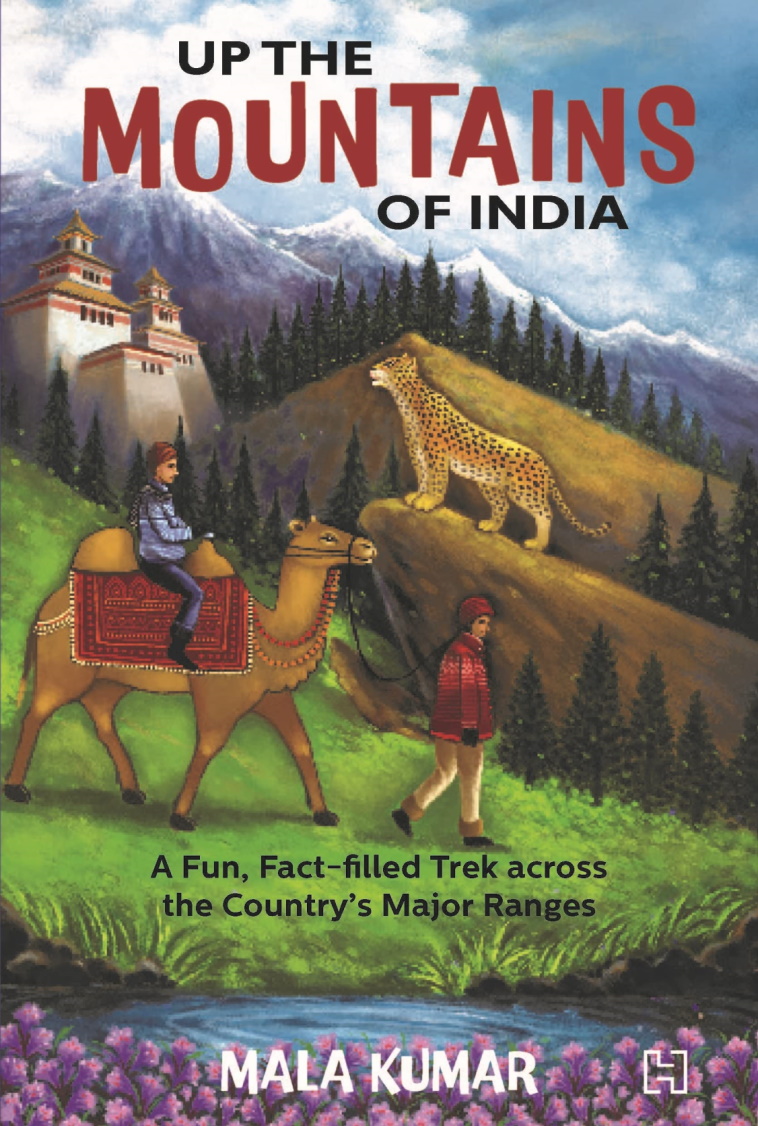
Book: Up The Mountains Of India

Finally it arrived! The author Mala Kumar connected with me a couple of years ago. She was writing a book on the mountains of India aimed primarily at young readers and wanted a geologist to help with fact checking some of the contents. We have had quite a few email exchanges since then, and my curiosity about this book has been growing even since. Mala has written over 40 books for children and this one is sure to enthrall them. But why just children? Anyone interested in India's varied physiography, geology, and wildlife, should read this book. 

I loved the way Mala has used everyday analogies to describe complex geology. One of my favorite examples is using a stuck piano key to explain about fault block mountains. The stuck key is a horst or a block that has moved up relative to the adjacent depressed keys which are called grabens. India's mountains are geological varied. The Himalaya, the Satpura, and the Western Ghats, for example, have formed by very different processes. Mala has used clear language and everyday familiar examples to simplify explanations of their origins. 

But this book is much more than about geology. Forests, wildlife, and human communities living in these rugged provinces really are the heart of the book. There are evocative descriptions of the animal and plant life of the different mountains ranges. Tibetan gazelles and mysterious snow leopards of the Himalaya, hoolock gibbons of the northeastern hills, majestic tigers of the Satpura and the Aravalli, and the bewildering varieties of frogs and reptiles of the Western Ghats, make us proud of our magnificent wildlife. There are lovely photographs scattered through the book. I could not stop gazing at the clouded leopard sitting elegantly on a branch deep in forests of the Mizo Hills. 

People too have lived in these mountains and forests since times immemorial. Their lives and life practices are being threatened as more mountain and forest land is gobbled up for dams, mines and expanding townships. In the northern Aravallis, villagers fought for years to save the sacred grove of Mangar Bani. In the Nallamali hills of Andhra Pradesh, members of the Chenchu tribe along with other organizations protested uranium mining that would have transgressed on the Amrabad Tiger Reserve. The book tells many stories from across the country, from the Aravallis, to the Eastern Ghats, to the Himalaya, of people struggling to conserve forests and water sources. 

Sketches and insets provide a welcome addition to the text. There are fun stories about the people of the mountains, about their crafts, about intrepid explorers, along with short quizzes, crammed in the insets that make the mountains come alive. 

Mountain ranges form the most important watersheds of our big rivers. Today, rampant development of mountain slopes coupled with climate change are becoming big threats to our water security. Mala Kumar's urgent call for conservation and sustainable development emerges again and again throughout the book and she has chosen her audience well. Whom better to inculcate a love and awareness for nature than in our children. These young citizens will be living in an increasingly challenging world and the hope of changing it for the better lies in a deeper understanding of how nature works. 

Go out for a trek in the mountains. Keep a lookout for that bright bluetail, and that curious langur who is peering at you half hidden from behind the thick leaves. Pick up pebbles from the stream bed and ask yourself about its geological secrets. Take a mountain train to the scented Nilgiri heights.  If you are hesitating, this book is an ideal place to begin.

Up the Mountains of India: A Fun, Fact-Filled Trek across the Country's Major Ranges - Mala Kumar. 


Tuesday, February 4, 2020

Articles: Herculaneum, Magma Ascent, Early Human Migration, Indian Cheetah

Some interesting articles on a variety of topics that I came across in the past few weeks.

1) What Really Happened at Herculaneum?

This off course refers to the violent eruption of Mount Vesuvias in 79 A.D.  A new study analyses the way bone and soft tissue react to extreme heat and proposes that the people found dead at Herculaneum did not vaporize but died of asphyxiation.

2)  The long wait and rapid rise of deep magma.

Magma can reside in deep chambers at the boundary between the crust and mantle for thousands of years before rising to the surface rapidly in a matter of a few days.

3) Neanderthal Genes Hint at Much Earlier Human Migration From Africa.

It was thought that 60,000 years ago modern humans migrated out of Africa and interbred with Neanderthals beginning around 40,000 years ago. As a result all non-Africans carry some Neanderthal DNA. A new DNA analysis technique now suggests that an earlier wave of humans migrated out of Africa some 200,000 years ago and interbred with Neanderthals. Their descendants back migrated to Africa carrying with them the legacy of this earlier mating. As a result, Africans too carry a genetic legacy of Neanderthals.

4) Introduce the cheetah, with caution and guidelines.

There is a proposal to introduce the African cheetah into the Indian landscape. Neha Sinha argues that a grasslands policy needs to be put in place first.
 

Monday, January 30, 2012

Science And Nature Programming On Indian Television

Yesterday afternoon I watched a good documentary on the wild game trade and its social and ecological context on National Geographic. The setting was the Central African Republic and the hour long episode followed a researcher studying the hunters, traders and customers involved in Africa's bush meat trade. It was a sobering look at the decimation of wildlife that is occurring in these regions. Logging roads are reaching ever more in the interior and bush meat is highly prized,  due to old social preferences and a lack of alternative sources of protein.

The documentary brought back memories of some fine programming that used to be common on National Geographic, Discovery and Animal Planet. I say this because I continue to be deeply disappointed with the recent programming on these channels. I looked through the guide and here is a sample of the programs which form the bulk of the repertoire these days. I have divided them up into themes - Science Fiction - Alien Invasion, Crop Circles.. Adventure/Reality - Banged up Abroad, Survivor, Gold Rush Alaska.... Wildlife / Nature - Man vs Wild, Monster Fish, River Monsters, Worlds Deadliest Animals, Duel in the Swamp...

All are fast paced action packed dramas, full of adventurers getting into trouble abroad, or trying to "survive" in a mountain range somewhere or diving into swamps and running through forests grabbing at otters, fish or whatever small animals that come their way. ..The wildlife shows focus on life's brutal side, with plenty of sequences of lions hunting and crocodiles dismembering prey, all with a hushed but triumphant voice telling us that might is right in the jungle.

The kind of unhurried slow paced shows that exposed - through conversations and fine camerawork - the intricacies of a particular topic are being overwhelmed by a gonzo reporting style. Maybe it's the Steve Irwin effect that many nature reporters now feel compelled to run and grab at wild animals. The science depicted on these shows is minimal at best. And what example for conservation and respect for wildlife does it set with such an aggressive and intrusive film-making?

I miss those old shows on so many varied topics - Vets of Rural England, A Social History of Tofu, The Ecology of Tasmanian Tigers, Indonesian Mining Industry, The Chinese Homo erectus, to name just a few.  These shows were excellent examples of carefully thought out ideas and topics and were filled with richly detailed and nuanced contents on the cultural histories of people and communities and their interface with medicine, ecology, geology, evolution and genetics. Lots of relevant science was packed in an episode.

There are still a few shows in this vein being made even now.. Expedition To Borneo.. being a recent example. But mostly,  inane "survival" and extreme adventure episodes, duels between humans and animals and sensational violent hunting sequences with blood and gore are dominating the television screens.The assumption seems to be that people these days have very little attention spans and the best educative value would be provided by rapid visual stimulation and bombarding viewers with an array of facts and conclusions.

That leaves little space for depicting science as it really is - a process of knowing, wherein constructing a hypothesis, gathering data and analyzing it and finding out that that has opened up more questions than answered your initial one is really how we gain new knowledge and clear a path for the discoveries of tomorrow.

Saturday, February 13, 2010

Environmental Impact Assessments In India Are Becoming A Joke

...time for another rant on the Environmental Impact Assessment ( EIA) process (which is required for clearing large developmental projects) in India.

What do you do to get a green signal for a development project in a bio-diverse wetland frequented by migratory birds?

Answer: Do the EIA in the summer months..when the wetlands are naturally drier and there are no winter migratory birds! Then file a report saying that there is no ecological value to this area...go ahead and build your project!

According to Dr Asad R. Rahmani of Bombay Natural History Society and Prof Asha Rajvanshi of the Wildlife Institute of India, that is what is happening in the case of the Naupada swamps in coastal Andhra Pradesh where an EIA report filed neglected to do a multi-year survey and instead considered only the period of 3 months from March to May.

How ludicrous.....how absurd can the process get?!!

The problem begins with how the state classifies the land. This piece of wetland is considered a "wasteland" by the district authorities. The hired consultants use that as a baseline and make no attempt to seriously evaluate the ecosystem.

That's how increasingly the EIA system seems to work...terms of reference and baselines are purposely kept narrow, limited and ill-considered and consultants with a past history of saying what the government wants to hear are favored. By relegating the EIA to a side-show with no real powers to halt a project or make its design conditional to the EIA finding,  a culture of shoddy science, incompetence and sheer dishonesty is being encouraged.

Beyond popular articles in mainstream media the EIA is coming under some more serious scrutiny in science publications as well. In the January 25 2010 issue of Current Science Devendra Kumar Agrawal, Mahendra S. Lodhi and Shradha Panwar do a case study of the potential impact of planned hydroelectric projects in the Alaknanda catchment in Uttarakhand and conclude that the EIA process is inadequately equipped to evaluate the region wide ecological impact of these projects. The EIA considers each project as separate and its larger impact on adjoining areas is not included in the scope of the EIA study. This piecemeal approach does not consider cascading and other non-tangible effects of these projects.

The Ministry of Environment and Forest which has the final say on these reports and projects is applying different clearance standards for different issues.

Here is what the Minister of Environment and Forest Mr. Jairam Ramesh said recently about the decision to withhold introduction of Bt Bringal (Times of India February 10 2010):

"It is my duty to adopt a cautious, precautionary principle based approach till such time independent scientific studies establish to the satisfaction of both the public and the professional the safety of the product".

Fine words..Mr Minister..but how about extending the same principles ...caution, precautionary principle based approach...independent science...satisfaction of both the public and the professional...to the EIA process?

Why has the EIA process been rendered so toothless that a project can begin even before the relevant EIA is completed..?

You Mr. Minister are overlooking and presiding over a grotesque perversion of science and the consequent loss of valuable biodiversity, ecological services and the livelihoods of people who depend on them.

India is a signatory to the Ramsar Agreement... a commitment to protect valuable wetlands.

Don't be a mute spectator.

Sunday, November 22, 2009

Israel -Jordan Border: Rodents Too Behave Differently

This from a Science Daily press release on the differences in ecosystems and animal behavior across the Israeli Jordanian border :

....the differences between Israel and Jordan are primarily in the higher level of agriculture and the higher number of agricultural farms in Israel as opposed to Jordan's agriculture that is primarily based on nomadic shepherding and traditional farming. The agricultural fields on the Israeli side of the border not only create a gulf between habitats and thereby cause an increase in the number of species in the region, but they also hail one of the most problematic of intruders in the world: the red fox. On the Jordanian side, the red fox is far less common, so that Jordanian gerbils can allow themselves to be more carefree. The higher reproduction rate of ant lions on Israel's side is also related to the presence of another animal: the Dorcas gazelle. This gazelle serves as an "environmental engineer" of a sort, as it breaks the earth's dry surface and enables ant lions to dig their funnels. The Dorcas gazelle is a protected animal in Israel, while hunting it in Jordan is permitted and compromises the presence of the Jordanian ant lions' soil engineers.

Important lessons for conservation here.

Friday, February 15, 2008

India's Tigers and Forests

I have been blogging quite a bit about the state of India's wildlife and forests. There has been a lot of news about this topics lately. Not all of it bad. Recently the Indus dolphin was sighted in Punjab river Beas after the gap of about 70 years. But overall the news has been depressing. Bharatpur bird sanctuary has virtually dried up. According to the latest census the tiger numbers in the country are now thought to around 1400 only, much below the earlier figure of about 3000 given by the government. And there is more bad news of the state of the forests. The latest census of the Forest Survey of India reveals that between 2003 and 2005 India lost about 700 sq km of prime forest land and suffered lots of degradation of dense to moderately dense forests. By a coincidence I had posted on this topic a few days before this report (2003-2005) came out. That post used data from an earlier census (2001-2003). That census showed that forest cover has actually increased by around 2700 sq km. But the devil is in the details. All that "growth" is either an artifact of better mapping due to improved satellite resolution or counts monocultures planted on degraded land away from any critical wildlife habitats. The core forests in and around tiger reserves for example continue to vanish and become degraded. Afforestation is not being directed to where it is most needed. I had used the Nameri tiger reserve in Assam to illustrate this point using images more recent that those used in the 2003 survey. Now this latest report confirms that prime forest areas are shrinking.

All over the world, not just India the basic problem has been that population pressures have altered the landscape in often irreversible ways. Contiguous forested areas have become fragmented. They are now islands surrounded by human presence and activities. In India nowhere is this illustrated with more clarity and devastating realization than where the Himalayan foothills grade into the north Indian plains. Below image shows this situation where the ranges suddenly give way (green dotted line) to irregular jagged pieces of forest, isolated from other such pieces, islands surrounded by intense agriculture land use.

The brown dotted polygons mark the approximate boundaries of the Dudwa tiger reserve in Uttar Pradesh. Three patches of forest which are becoming increasingly fragmented and frayed at the edges literally. How do you manage healthy tiger populations is these isolated islands? They are few 100's of sq km large, able to sustain a few ten's of tigers at most in each of the forest patches. How do you ensure a healthy gene pool with such small numbers? Some years ago when I was living in Florida, wildlife authorities were faced with a similar problem with the Florida panther. A small population showing signs of debilitating health effects from inbreeding. So, the Texas cougar a close relative of the panther was introduced in the Florida habitats of the panther. The results are encouraging. Florida panther populations today are healthier. Increasingly it is not going to be enough to just manage the physical aspects of the ecosystem. Our wildlife management plans currently claim to focus on afforestation, resolving human animal conflicts at forest margins, controlling logging and poaching. These are worthy goals. Poaching especially is suspected to have disproportionately contributed to the recent decline in tiger numbers. But even if our reserves become well protected against poaching we have to live with the reality that most of our tiger habitats are never going to connected to each other again and animals trapped in isolated habitats will need more help. We will have to manage their biology for them as well. Conservationists often talk about setting up migration corridors but take a look at the above image of Dudwa which for administrative purposes is one tiger reserve. The three forest patches are separated by 10's of km of intense agriculture land use. It is inconceivable that we can change land use and relocate humans on this scale. Most reserves in India are now separated by 100's of km of no forest areas and migration corridors cannot be thought of as a general solution to habitat isolation. In this context saying India has a total of 1400 tigers or 3000 tigers or some other number becomes less meaningful than assessing what viable population can be maintained in each of the forest islands across which natural migration and gene flow is now impossible. By such separate assessments may come the unpleasant knowledge that 1500 to 2000 is the total healthy population that can be sustained given the limited amounts of forests left. Off course this number will be hopefully much more, but to come to a stage where we are in a position to develop a tiger management plan backed by some hard science we will need increasingly focussed biological information on individual tiger populations. This means developing genetic databases of tigers to understand the genetic structure of populations. Regular screening for signs of inbreeding and setting up a well funded programme for induced gene flows across our tiger reserves. Are we geared up for a biological management plan for tigers?

What has been the reaction of the government to the recent report that 700 sq km of prime forest has been lost?

"Overall, the decrease is insignificant. It is not worrying as India's forest cover has more or less stabilised and ranks number 10 globally on a per capita basis," said Devendra Pandey, director-general of Forest Survey of India.

It is a statement only an Indian bureaucrat can make. Factually correct in a very narrow sense but showing a contemptuous arrogant indifference to the ground ramifications of the finding. Pretending everything is fine because we rank number 10 globally on a per capita basis. How on earth is that hollow boast supposed to help the tiger? Dismissing the real loss of prime habitat by pointing out that our forest cover has more or less stabilized. In an earlier post I pointed out how meaningless this stabilizing is in the context of the health of critical wildlife habitats. Afforestation is simply an exercise carried out to balance the books of the ministry of environment and forest. Let's take another look at how this "stabilization of forest cover" is working out. Below is a forest cover map of Buxa tiger reserve in West Bengal. This data was complied from 2001 satellite images.

Source: Forest Survey of India

Green is dense to moderately dense forest and yellow is open forest which has about 10-40% forest cover. Look at the area around the red arrow. And compare it with a close up below of the same area taken in 2006.


If our afforestation programme really was meaningfully designed, this open forest shown in 2002 should have been targeted for improvement. The reality? By 2006 the entire area has been converted to farmland. "Ground Truthing" in remote sensing parlance refers to the validation of automated classification algorithms used in land cover mapping. Over here the term ground truth has taken on a much more urgent meaning. The truth is that our prime ecologically rich forest areas are disappearing but the government doesn't seem to care. Through its reports it is misleading it's citizens by creating statistical illusions of forest cover "balance" and "stabilization". As long as somewhere far away an equivalent amount of area is greened with monoculture plantations the forest department goals of "stabilizing" forest cover will be met and a false victory proclaimed.

Write to your state forest department and demand action. The link to the Maharashtra forest department is : Maharashtra Forest Officials

See also:

India Gains Forest Cover, But....
Bharatpur Bird Sanctuary Dries Up
Indus Dolphin Sighted in Punjab

Thursday, February 7, 2008

India Gains Forest Cover, But....

From my Geology News Feed: Is the Amazon Forest a Carbon Emitter or Sink?

The article discusses a research project to understand the carbon balance in the Amazon. Results do not yet clearly say whether the Amazon sucks in as much carbon as it emits through organic decay and deforestation but scientists feel that the rate at which it is being logged (about 8000 sq miles per year!) a tipping point i.e. when carbon emissions from the Amazon will exceed carbon sequestration may be approaching if the current rate of deforestation is not slowed down. Worldwide deforestation contributes to about 20% of greenhouse gas emissions, so preservation of forests is an important component of fighting climate change. The figure below shows the change in forest cover over the last few years countrywise.

India has added about 700,000 acres according to this figure. I confirmed this from the Forest Survey of India site. India has added about 2797 sq km of forest going by the latest census in 2003. This compared with the earlier census of 2001. From a climate change mitigation point of view this must be seen as a positive trend. All this growth of new forest owes much to the National Afforestation Programme which aimed to increase total forest cover by about 7-8 lakh hectares or about 7000 sq km by the end of around 2006. The latest census figures are not available to me so I cannot report on whether this target has been reached.

How does all this increase in forest cover impact wildlife and biodiversity. On this front the news is not good. I looked at some of our core forests, the ones which have been given tiger reserve status. These are generally forest areas which are quite rich in biodiversity and preserve contiguous areas of dense tree cover. Again I used a report prepared to assess the forest cover changes (warning: 54 mb download) in and around tiger reserves by the Forest Survey of India. The census was up to 2002. It shows not much forest is being added to these critical animal habitats. Only about 25 sq km of new forest growth in and around tiger reserves has been recorded and that to in just 4 of the 28 tiger reserves. There has been a net decrease of about 94 sq km of forest from within the tiger reserves since 1997 and about 124 sq km in the immediate surrounds of the reserves during the same time span. Moreover there are signs that the forests are degrading. For example about 270 sq km of dense to moderate dense forest became open forest i.e. forest with canopy density of 10-40%. Overall forest cover in and around tiger reserves amount to about 55, 000 sq km. Total forest cover in India is about 670,000 sq km (6.7 lakh sq km) by the 2003 census. It helps to look at a specific case in detail. The figures below shows a map of the Nameri tiger reserve in Assam. Compare the 1997 map to the left with the 2002 map to the right. The green represents dense to moderate dense forest while the yellow is open forest.


Source: Forest Survey of India

You can see a significant decrease in the green and yellow patches in the 2002 map. Nameri lost about 22 sq km of forest from 1997 to 2002. One might argue these are slight dated figures and the forest cover may have increased in the last several years. I hope that is the case but I am not too optimistic. There are conflicting views on whether the recent increase in forest cover reported in the 2003 census is a real increase due to afforestation or an artifact created simply by improved resolution of satellite images used in the audit i.e. previously uncounted parcels of forest are now being mapped due to improved resolution. Afforestation has probably not improved the situation near most of the tiger reserves in recent years. Below satellite image contains data from 2003-2006, more recent than the Forest Survey of India data I presented and it shows no signs of any new forest growth.


Compare this image with the 1997 map. In this close up, around the arrows, increase of agriculture near the fringes and thinning and deforestation south of the river has completely stripped the land of forest. Here pressure for land and conversion of forest to agriculture use seems to be increasing. In my last post I showed a similar situation in the Gir forest. Most reports one reads today document increasing degradation of critical wildlife habitats, so its a fair guess that afforestation programs are not being successfully directed towards these core forest areas.

All this gains importance in the context of the recent announcement of allocating Rs 600 crore for the tiger protection programme. Much of the money in this programme is said to be for rehabilitation of communities living around tiger reserves and improving security infrastructure to combat poaching. That is welcome news since as seen in the images, human activities around core forest areas eventually lead to deforestation and forest fragmentation. The situation depicted in the above image of Nameri reserve offers a test case for the ongoing afforestation programmes. South of the river what used to be contiguous tracts of forest have disappeared, fragmenting the forest in to isolated blocks. It is here that afforestation by providing migration corridors for animals, in the above case by recreating contiguous forest cover south of the river, can make a real difference in improving wildlife habitat. The best chance we have of saving wildlife and biodiversity is by concentrating on the core forest areas that have been preserved so far and have been least affected by farming and logging concessions. But the data on afforestation done so far suggests otherwise. For now it does appear that afforestation is more a method to simply increase "forest" cover to meet government targets. Plantations are usually carried out on degraded forest land i.e land under forest department jurisdiction which has currently no or little tree cover with no due importance given to either biodiversity or whether such plantations are contiguous with critical wildlife habitats. I am always amazed by this utter disconnect between various government organizations. Our wildlife biologists are as well trained as any in the world. They must be recommending conservation plans for wildlife habitats. Yet most afforestation seems to be taking place away from such habitats and judging by reports and my own personal observations at least in Maharashtra, afforestation means planting mono-culture. These isolated patches of green do get picked up by digital image sensors aboard our remote sensing satellites and get converted into estimates of "forest cover" increase. But they by and large are not helping in preserving our biodiversity.

Friday, February 1, 2008

Bharatpur Bird Sanctuary Dries Up

From the Times of India, an editorial on the world famous Bharatpur bird sanctuary or what used to be a sanctuary. It has dried up. The sanctuary known as the Keoladeo National Park is an artificial wetland created in the mid 1700's as a hunting ground for Rajasthan royals and relies on annual release of water from various nearby rivers. Lately water that was meant for the wetland is being increasingly diverted to farmland, progressively drying up the park. The birds have already left for wetter pastures. If wetlands are not resorted soon, it will lose recognition as a world heritage site. What a shame! Below is an image of the Bharatpur wetlands.


In this image at low resolution there appears to be plenty of green within the park but take a look a a close up below.


The entire area is dry. Only in the vicinity of the green dot could I find some water. Few green patches indicate the presence of moist soil, but no water, no wetland and no birds. Looking at the close up one can understand how precarious the health of the wetlands always has been. Being an artificial creation, the boundaries of the wetlands are sharp and are surrounded by intense agriculture land use. The light colored rectangular quilt like pattern you see surrounding the central dark former wetland are farm plots. The conflict for allocation of water for people versus animals is a perpetual problem in India and the needs of the people win out.

Such degradation of our national parks is happening to various extents all over the country. Bharatpur is an extreme example of a small sanctuary whose support system has completely collapsed. Take another famous sanctuary, the Gir Forest National Park. This is world famous for being the last natural habitat of the Asiatic lion. Image below shows the Gir forest area.


At this scale all appears well, large green patches with no apparent disturbance. But image interpretation is about pattern recognition. Take a look the areas at the southern margins of the forest around the green arrows. The green patches around these arrows have a more speckled appearance compared to the green patches in the center. Close up below reveals all.

Again those rectangular patches you saw around Bharatpur, farmland making its ways into the forest following the water courses, small streams, water holes, the same water sources that wild animals use. A conflict in the making.

What is the future for India's wildlife and biodiversity? There are conflicting signals from the politicians. Yesterday the centre announced a package of Rs 600 crore for project Tiger, to be used for the tiger conservation programme. This for now should be seen as good news. On the other hand, political interference and interest in the exploitation of forests is alive and well. India Today recently reported on poaching rings in UP, and yesterday several Kashmir politicos have been accused of illegal exploitation of timber. The culture needs to change from viewing forests and wildlife as a resource to be exploited, as some obstacle to development, to one where our biodiversity is seen as an integral and important component of our development. Until then, tiger rescue packages notwithstanding, conservation plans will always be at the mercy of local political winds. I mean as a scientist I can well imagine the frustration of a senior forest officer who having carefully drawn conservation plans for a particular area is told by the local politico, oh-sorry no water for you this year!

Another big danger besides the increasing human wildlife conflict is climate change. Today's conservation plans are drawn on the assumption that the current ecological boundaries will remain so for the foreseeable future. But what if in response to shifting climatic belts, ecological boundaries also shift? This is an imminent danger facing India. Our current conservation plans are barely able to cope with problems of human encroachment into forest areas by rehabilitation and relocation plans for humans. What will happen if forests further fragment in response to climate change and ecological belts move? Where will the animals go?

Friday, January 25, 2008

Indus Dolphin Sighted in Punjab

How long since the last sighting of a creature for it (the species) to be declared extinct? There is no clear answer to this. It is very difficult to definitively say that all populations of the species have vanished across its entire range. The Indus dolphin Platanista minor is one of the few freshwater dolphin species in the world. Besides the Indus dolphin the Indian subcontinent also has the Ganges Brahmaputra freshwater dolphins. Both species are endangered with numbers estimated to be at most in the several hundreds each. The Indus dolphin's range extends beyond the Indus main channel to its many tributaries such as the Sutlej and Beas. It was last seen in the Punjab rivers in the 1930's which is why the sighting of this animal in the Harike wildlife sanctuary south of Amritsar couple of weeks ago has caused delight among wildlife enthusiasts. The image below shows the Harike wetlands formed at the confluence of the Sutlej and Beas rivers.

It is astonishing that there was not a single confirmed sighting of this dolphin in the Punjab for about 70 years. These are not some isolated stretches of rivers. Punjab is heavily populated, with extensive agriculture land use along the banks of its rivers. Biologists are not sure if the Indus dolphin is really broken up into semi-isolated sub populations or there are regular encounters between populations in the Sutlej-Beas with those in the Indus main channel. Is it possible that the Sutlej population went extinct and these latest sightings represent a new population recently migrated from the Indus channel. Do the many barrages on the Punjab rivers pose a serious barrier to migration or can the dolphin negotiate these barriers especially at flood times? Many questions and I hope wildlife authorities take this opportunity to extensively study this species. Just to give you an idea of the range of this species the image below shows the Indus river basin from its delta up to the Harike wetlands.

Sightings such as these makes me think about how many species are yet to be discovered. The focus in recent years and correctly so has been on the accelerated rate of extinction. But around 300 new species are being formally described by scientists daily across the entire range of life. A new mammal species is reported once every 3 years and a large new vertebrate from the open ocean once every 5 years. There are currently about 1.6 million species recorded but at the current rate of discovery these could represent about 10% of the total species currently living on earth. What rate of species loss can the biosphere sustain without shrinking overall? It is estimated that about 99% of species that have ever lived are now extinct. The diverse biota today must reflect then a slight excess of speciation over extinction. Using the fossil record the background extinction rate has been calculated to around 2.5 species per year which suggests a slightly higher speciation rate to maintain overall diversity. This estimate should be regarded as a canonical speciation rate and the variance around this mean speciation rate is more useful in understanding speciation patterns and diversity. A recent measurement suggests this approach to understanding the problem. If there are about 16 million species at present then every year the tree of life grows by an additional 16 million years of branch length. The average age of living species is about 5 million years. To maintain overall branch length i.e. to sustain current levels of biodiversity will require not more than 3 species per year going extinct. Measured extinction rates since the 1600's suggest that about 25 species have gone extinct every decade a figure that agrees with the above theoretical expectations. This rate however should be considered an underestimate since many extinctions would have gone unnoticed and has definitely increased recently. For example the last century has seen about 20 mammalian species alone going extinct. The effect of natural extinction on overall biodiversity is very different from a mass extinction such as the one human activity has almost certainly induced. Unlike natural background extinctions the current increased rates of extinction may be non-random i.e it may not just prune the branches of life but wipe out related branches of the tree of life causing similar types of organisms to selectively disappear. The overall structure of the tree of life may change with certain ecosystems or tiers within ecosystems disproportionately emptied than others, causing genuine reductions in biodiversity. Something like this may already be going on, for example amphibians have been assessed to be at greater risk from global warming than other vertebrate groups. Anyways its great to see the dolphins back in Punjab. May the force be with them.

Meanwhile in another wetland that dried up some time back, this sighting of an incredible rare creature.

From NASA Mars explorer image, what looks like a humanoid female clambering down the slope towards a dried up lake bed in search of .... maybe water, food or dry ice? The Indian media has had a field day with this with experts coming and giving long talks on the possibility of martian life. Amazing stuff!